The year was 2012, and for some reason I decided to go all alone to Tanzania and climb Kilimanjaro. I was not part of a group and organised my own trip. There is no reason why you should pay extra to a travel company in your company for this hike, since the local law says only local companies can operate on the mountain. You should therefore organise your trip directly with one of the companies in Moshi that have lisence to operate on the mountain, and then buy your flight ticket your self. The company will pick you up at the airport and fasilitate everything from there.
Thousands of people climb Kilimanjaro everyday, and hundreds push for the summit every night. They all have the aim, reaching the summit in time to see the sun rise over Africa for the highest point on the continent. Since I visitied Kilimanjaro I have climbed several other African mountains, and I have to say that Kilimanjaro was the easiest one. There is only one question for you if you otherwise is in good health: Can you handle the altitude? I did, and it was the start of many hard altitude trips later. However others didn’t. Who makes it, and who doesn’t is difficult to say. I walked with a very good marathon runner, that said “Tomorow I will reach the summit in only two hours.” Well he reached the summit, but at that point I was already back down from the summit, sleeping in my tent, and I have never been running much. We started walking at the same time.
So Climbing Kilimanjaro is a dream for many people. It’s achiveable for most people, but it’s certainly no walk in the park. As many as 60% that tries never reach the summit. It’s actually the more difficult routes that have highest success rate, while the “easy” Coca-Cola route has the highest failure.
I went alone from Norway to Kilimanjaro to climb the scenic “Whiskey-Route” from Machame Gate. At the hotel my 1-man expedition joined 4 Italians also climbing the same route. We were accompanied by 12 porters, chef and guide and assistant guide. Here are my notes and reflections from the trek.
Stage 1: Machame Gate to Machame Huts:
Distance 12 km. Altimeter 1800 – 2900. Duration 5 hours
My race for the summit didn’t start at Machame gate, but already in Oslo. I spent 35 hours getting to my destination as airports in Europe closed because of snow. A cancelled flight to Amsterdam, a sick pilot in London, and the fact that my flight in London also almost got cancelled, and finally that KLM messed up my flights so I got stuck for hours in Dar Es Saalam without a ticket to Kilimanjaro, made me doubt that I would ever get to Machame Gate, and at least not the summit. But somehow made it there, with a few new grey hairs on my head.
Anyways back to the start of the hike. Driving with an old buss from the hotel in Moshi would normally take about an hour, but numerous errands by the guides made the trip an hour longer. It didn’t concern me as enjoyed the time studying the lively and seemingly chaotic African roadside.
When arriving at the gate, we had to register before we could start our walk. While standing in line for registration street vendors tried eagerly to sell hats, t-shirts and drinks, and the porters were busy organising who was going to carry what. It was a busy place, and a reminder that tihis all business. After 1-2 hours waiting at the gate we could finally start our six days long hike to Africa’s highest point, Uhuru Peak. It felt good! I knew I would enjoy every single step of the trip, hard or not.
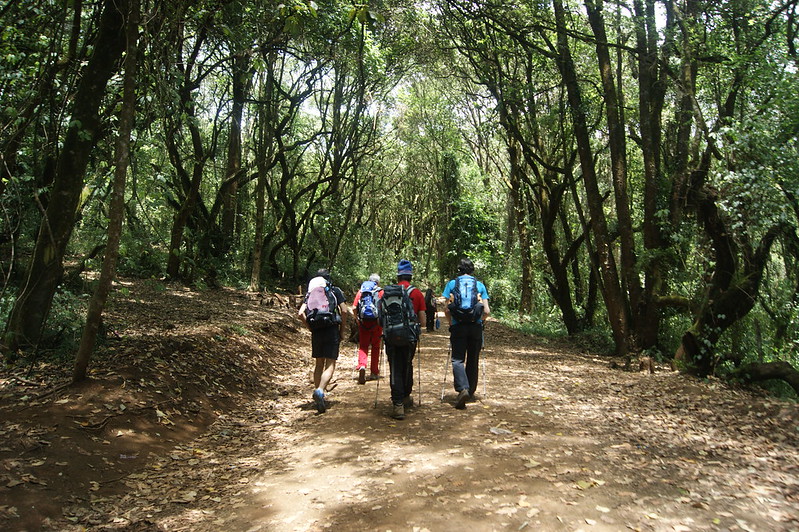
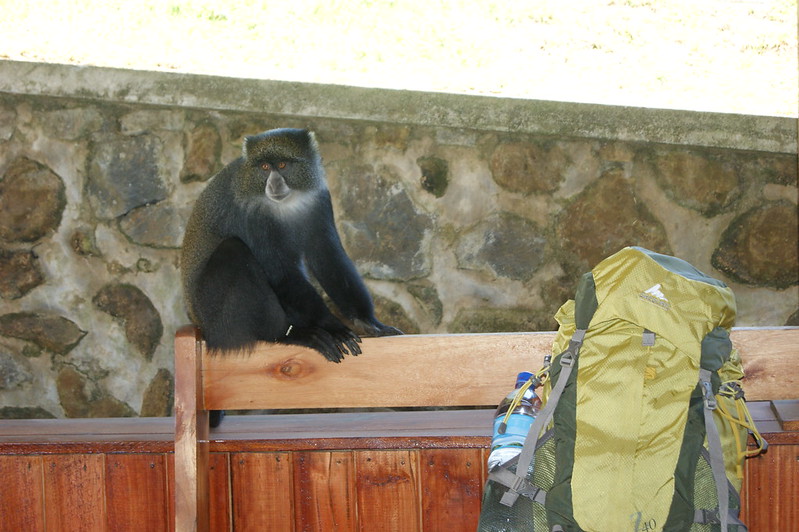
The first day is a more than 10 km long walk through the rainforest. I love rain forests. The first 3 km is an easy walk along a 4WD road while the rest goes along a path that cut’s through the the deep and thick rainforest. The threes gives good protection from the strong sun, and the temperature in the forest was much more pleasant than the 33 degrees we had in Moshi earlier. We were lucky with the weather also, as we escaped rain. I enjoyed walking in the forest very much. I spotted blue monkeys, and I could hear the monkey-like screams from the Turaco, and I spent the time chatting and getting to know my guides, while the carriers rushed by us. As we gained altitude the threes got smaller and from clearings we could enjoy great views over the forests.
Already as we started our walk the guides stressed the importance of walking “pole pole” – slowly, slowly. So I spent all the time I could on the walk, taking photos and enjoying the beauty of the forest. I had to rush, knowing we had all day on a relatively short walk.
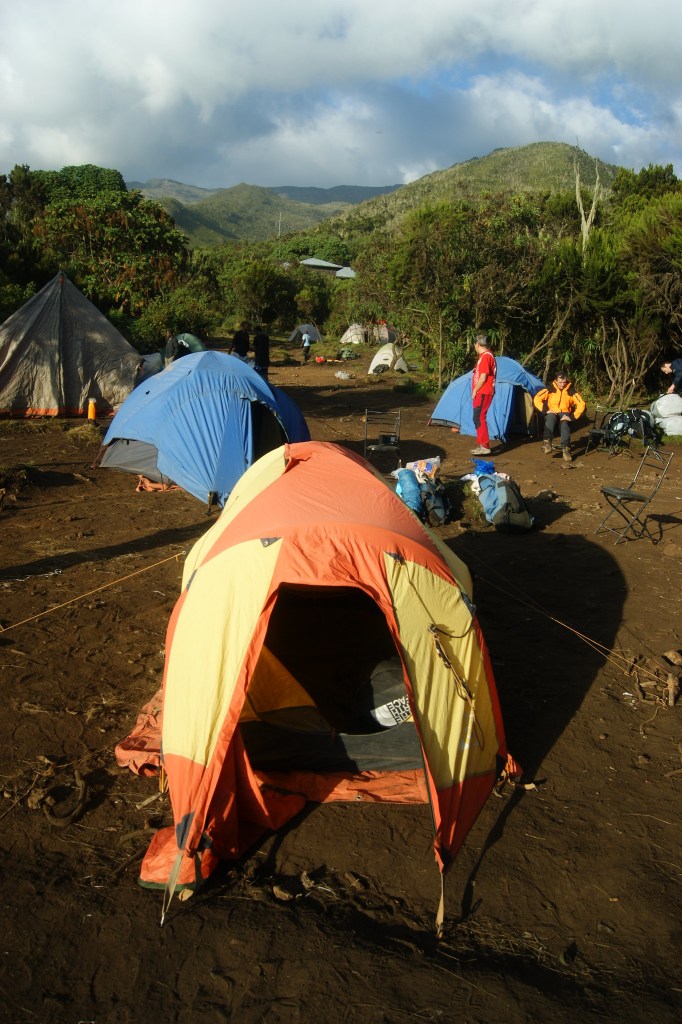
In the afternoon we arrived at 3100 metres altitude the Machame camp. Again we had to register, before we could jump into our yellow / orange tents that the porters already had put up.
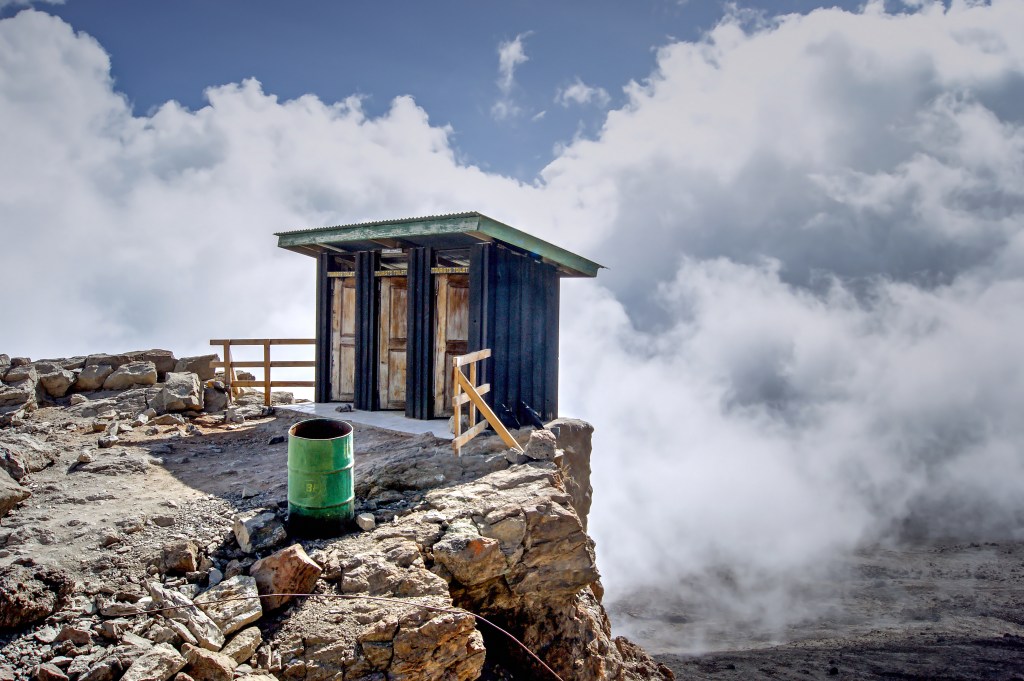
Now we were introduced for a few rituals that would remain the same every day. First washing, then tea, and not much later dinner. The rest of the afternoon I spent talking with other hikers, and the crew. There was also the stressing issue of going to the horrible toiltet facility, something one would not get used to on this trip. I tried to get some reception on my phone, but that ship had already sailed.
At around ten I crawled down in my sleeping bag, and already this first night the temperature crawled below zero. There were many people at camp, and a buzzing noise of voices and singing only stopped for a couple of hours that night. The rescue this night, and every night after was my mp3 player. A very good memory from this trip was a wonderful view over the land below with a low hanging moon shining on Kilimanjaro.
Stage 2: Machame Huts to Shira Caves
Distance 7 km. Altitude gained 820m. Duration 5 hours
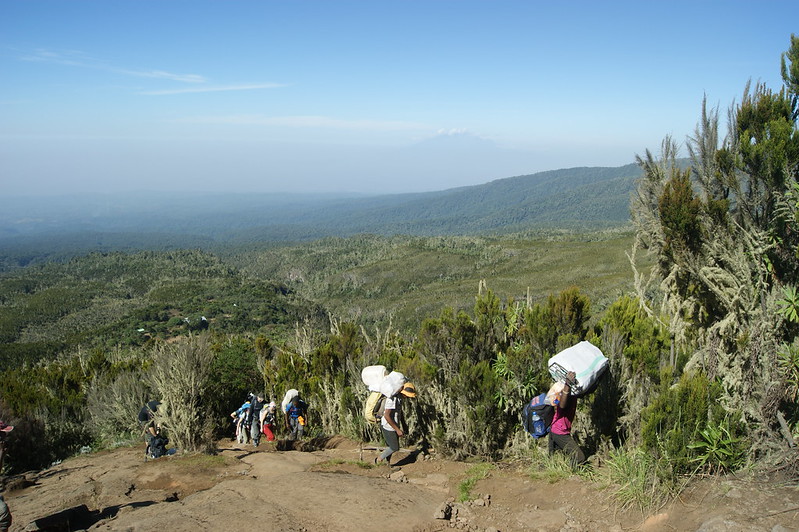
After spending the night at the Machame Huts, we were waken around 6:30 next morning. After a long and good breakfast with sausages and eggs we started the 5 km climb to the Shira caves. This was the easiest stage on the six days long trek. However the terrain is a little steep and now we could feel the altitude making it harder. Still “Pole Pole” was the golden rule, and on this stage you have a lot of time on your hands. The terrain was now very different from the previous day. The shadows of the Rainforest was gone, and the boiling sun was hammering on our necks. I used the strongest sun lotion I could find. Still Imanaged to get burned this day.
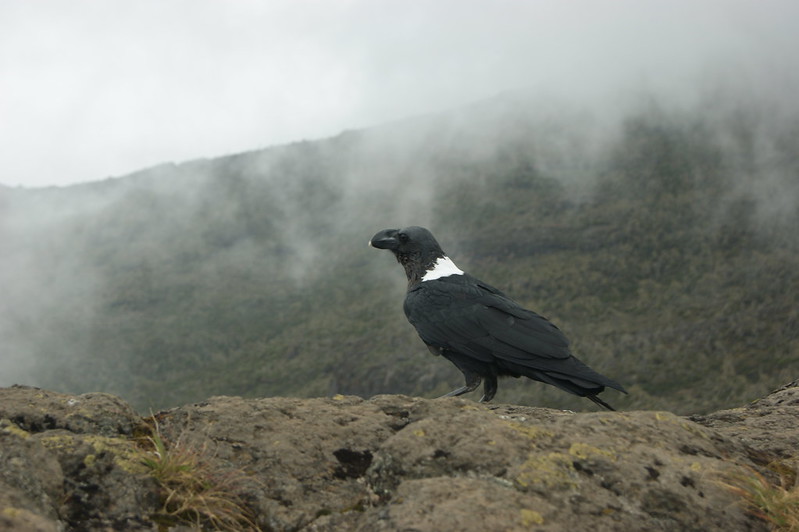
With the lower vegetation we were now rewarded with great views in all directions. above us was Kilimanjaro, and below us was the great forests. For the first time we could also spot Mount Meru in the horisont. A line of porters and trekkers pointet the route to the Shira plateau. At lunch stop the big white-necked ravens appared in numbers, and from this point these scavengers were always present on our hike.
As the day went on we could see all the way down to Machame Gate, and the camp we left in the morning. Interesting and exotic vegetation appeared and it was an interesting walk to Shira caves camp.
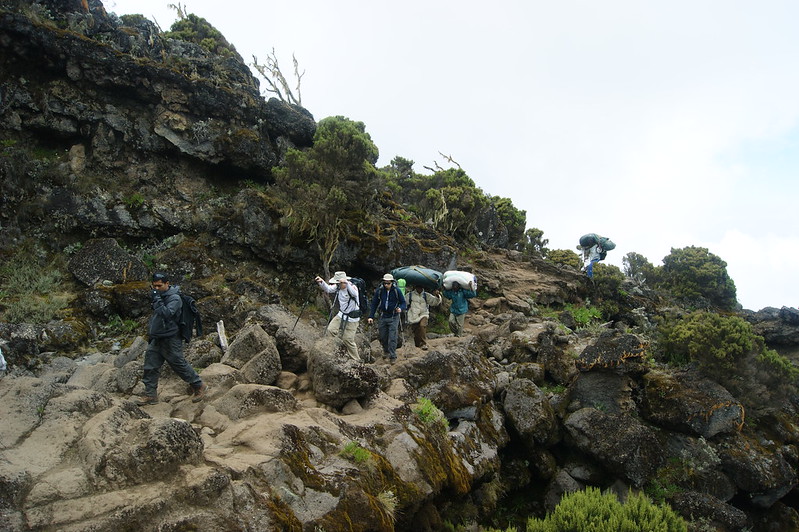
We arrived the Shira camp very early, and this camp is where we spent most time. This ment that there was plenty time for socialising with other trekkers and porters, and we also made a little walk to the caves that gives name to the camp. On some rocks a short walk from camp it was also possible to make phone calls, so this place was very bussy at all times. We were now at 3840 metres altitude, and from now on I always had what we called the “the one percent headache.”
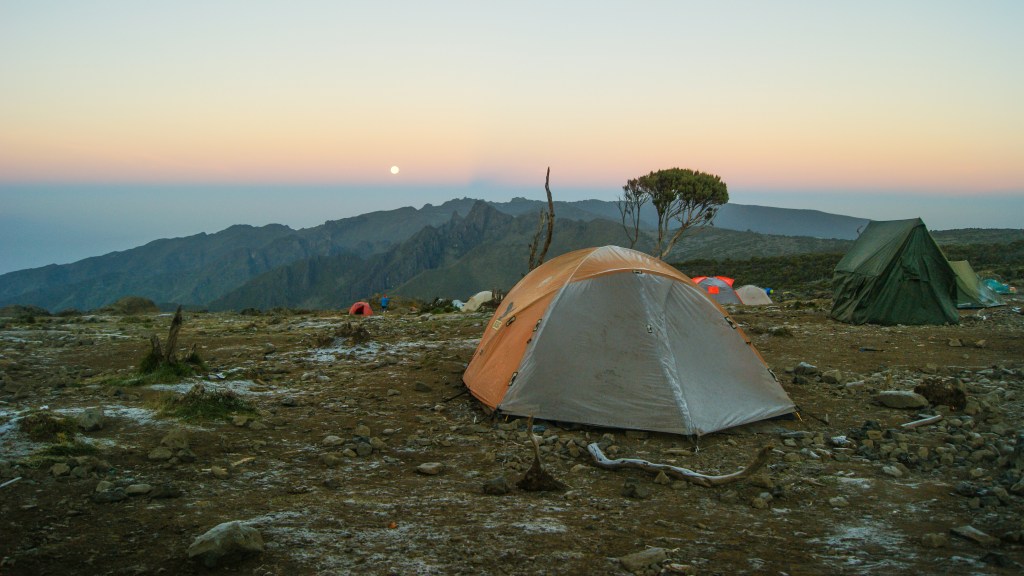
The Shira camp is a beautiful one, and the afternoon views as the sun set were of the type I hoped to experience when I went on this trip. The Shira plateau is also your best hope when it comes to spotting larger animals. Buffaloes and other animals have been seen here, but we didn’t see anything larger than mice and the many white-necked ravens.
The night at Shira was very cold. For the first time my Helsport Isfjorden winter sleeping bag came to my full use.
Stage 3: Shira Caves to Barranco
Distance 13 km. Altitude gained: 150 metres.Duration 7 hours
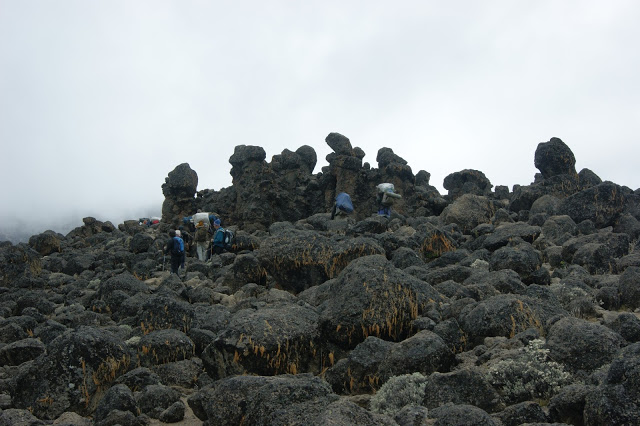
This was an exciting day for us, as we took an acclimatitation trip to Lava Tower at respectable 4623 metres altitude, before going down to Barranco at “only” 3900 metres. At the end of the day we had only won a few metres altitude from our efforts. However going high, and sleeping low is the key for this route’s high success rate compared with other routes on the mountain.
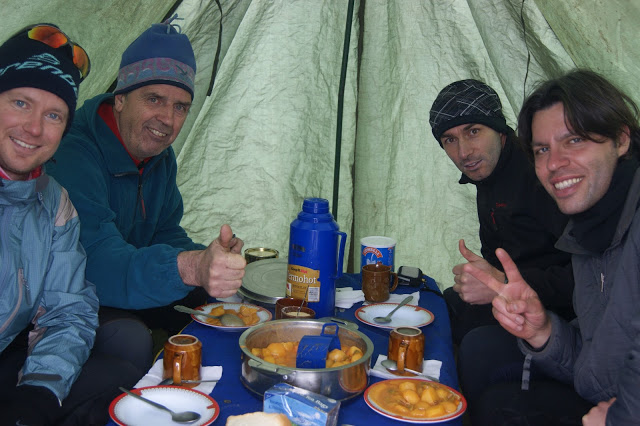
At this day we moved from the western part of the Kilimanjaro to the Southern side via LavaTower.The walking terrain was easy and not very steep, but perhaps somewhat monotonous. After a few hours when arriving at the foot of Lava Tower, the porters had set up our dining tent, and tea and a big warm lunch waited (I am really impressed with the standars and the service provided by our porters).
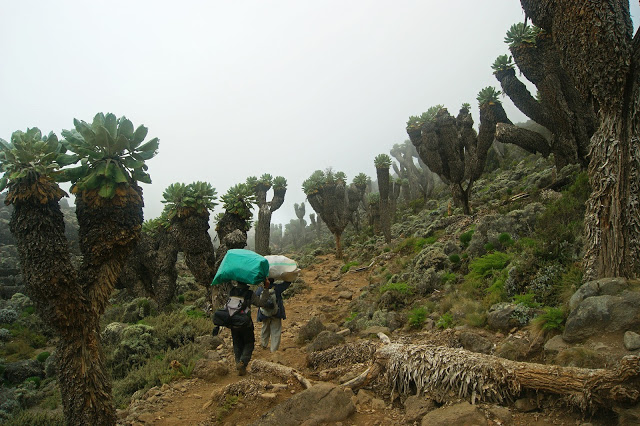
At Lava Tower there is also an encampment for those choosing the less popularWestern Breach route. This route is steeper and exposed for rock falls. At Lava Tower Kilimanjaro is now hanging over our heads. However now we started descenting down the beautiful Barranco valley alongside a stream coming down the mountain. Now we got introduced to the very special threes “Senecio Johnstonii.” Still most of us had trouble enjoying the scenaries since we all suffered from head aches coming down from Lava Tower.
When I arrived camp that afternoon the little headache I had disappered, and wold not be a noticable again before my descent from Uhuru Peak. This campsite was also very scenic, but at this point I for the first time on the hike felt a bit exhausted and spent all the time not eating, in my sleeping bag. It was also very cold this night with temperature as low as minus 15 degrees celsius.
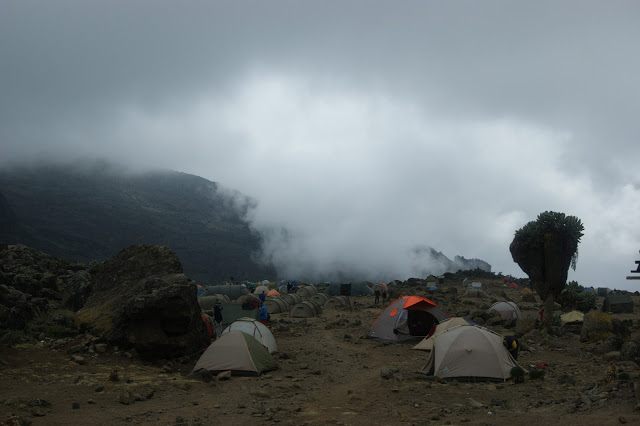
Stage 4: Barranco camp – Barrafu
Distance 13 km. Altimeter 3950 m- 4666 m. Duration 7 hours
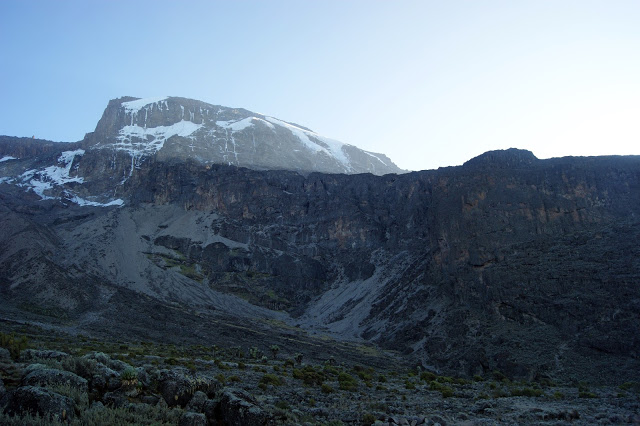
The 4th day was a long one. Not only because this is where we skipped the 7th day, choosing to not sleep over at Karanga camp, but instead going the full length to Barafu Camp. But also because the same evening we would start our push for the summit, Uhuru Peak.
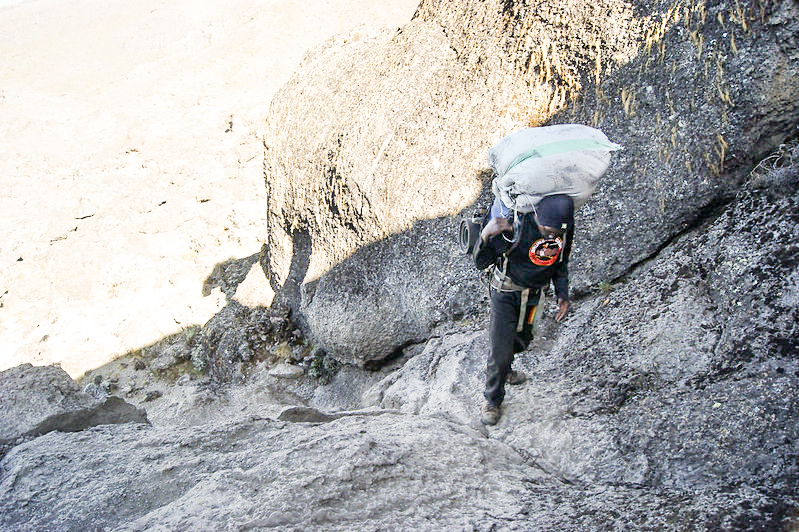
The day started early. We were waken six in the morning, after the coldest night so far. -15 degrees celsius. After breakfast the most technical part on the whole trek waited us, climbing up Barranco wall. The 300 metres high wall looked steep and for some frightening at start, but as you start climbing you will find good grips all the way. The first half hour is a bit strenous, and trekking poles had to be put away as we needed both hands scrambling up the wall. But remember, the porters easily carries heavy loads on their heads up here too, and the terrain never gets much exposed. When finally arriving at the top of the wall and hour later, we were rewarded with a massive view.
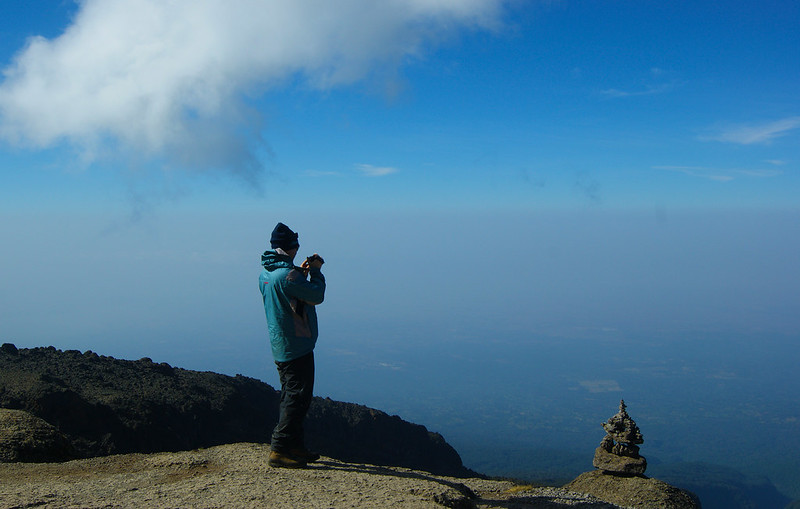
After this we continued downhill down a valley before we once again had to go up the somewhat steep terrain to Karanga. At Karanga we had a longer and very good lunch, before walking 3 more hours up to our last camp before summit, the rocky Barafu.
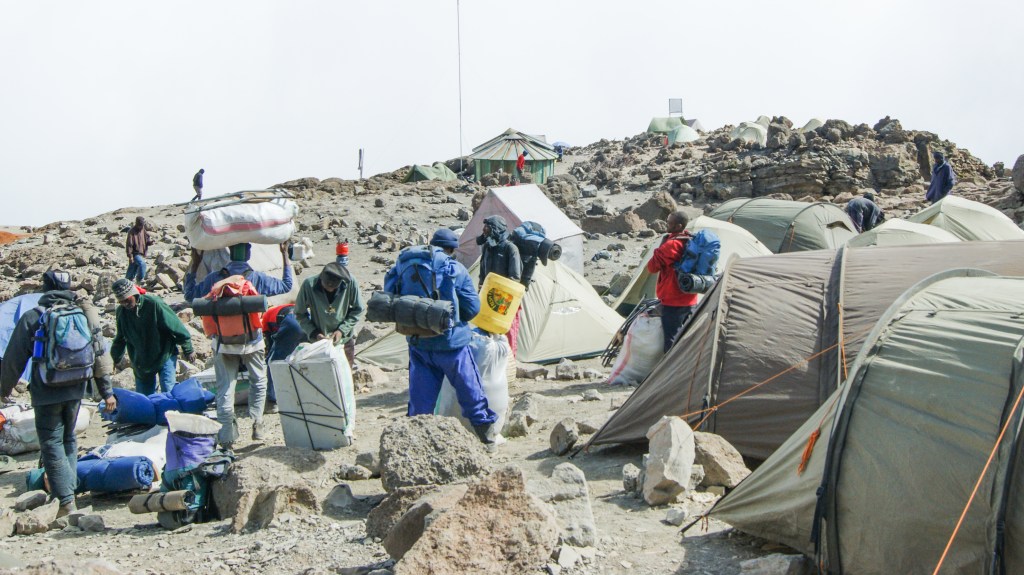
This was a beautiful place, and the weather was good too. However at 4668 metres altitude I could now really feel that the air was thinner. Still I felt very good, no headache or other things. I was simply very fit for the last stretch to summit.
Stage 5: Barafu – Uhuru Peak – Mweka camp
Distance 22 km. Altimeter 4668 – 5895 – 3100. Duration 11-12 hours
This was it! The big moment had come. It was time to push for the summit. I went to my tent a little before eight o’clock in the evening. Knowing that I now only had 3,5 hours to sleep, and that a long and streneous night waited I found it hard to sleep at all. To much was at stake, everything else than reaching Uhuru Peak would be a big failure. Let’s face it. Exuses like “The journey, not the destination is most important” has no value at this point. On Kili the summit is everything.
Our staff let us sleep until midnight, but the buzz from those starting earlier made it impossible to sleep. So I decided to wake up a little earlier so I could pack my bag, prepare my headlamp and clothes, get my water boiled, and go to the toilet etc. without breaking the golden rule “Pole Pole (slowly slowly).”
It was blowing strong and cold winds, so we knew this would be an extremely cold night even though the temperature was not more than minus 6-7 degrees celsius. Adding the wind it must have been -20. I put on 2 layers of wool, 1 fleece, 1 Bergans duvet jacket, 1 windbreaker, balaklava and even a beanie, still I was cold going up. However, no one was going very fast, and some people were hardly moving at all.
It had been a long day, but still I felt more than ready for the long night walk. After being served a warm cup of tea (we didn’t get any food before starting) and a long wait for the 4 litres of water I wanted for my trip to the summit we were finally ready. However we were now one of the last ones to start walking. A string of light showed the trail upwards. I didn’t imagine before going that it would be so many people. In fact you will manage fine without a headlamp, because when hundreds of lamps light up it’s like one giant one. The walk up is very monotone walking in line up the steep path. I held a phase that was very slowly, but I had few breaks. As we walked up some people were escorted down because of altitude sickness. Every 1,5 hour I ate a tube of energy gel. I had boiled water on my camelback, and by blowing back after every sip I managed to avoid the it to freeze before Stella Point.
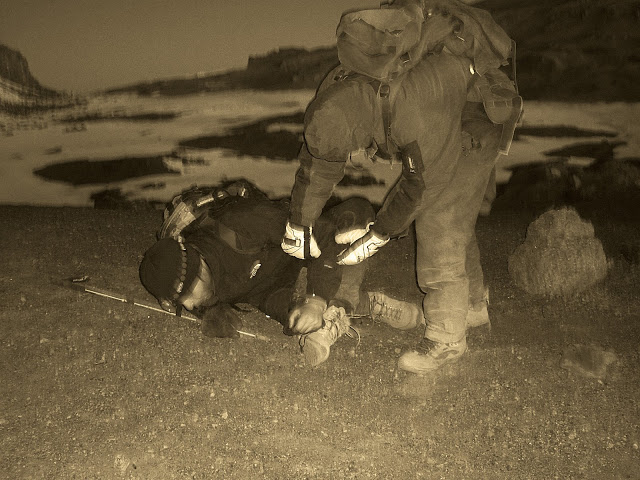
While focus going up was on putting one foot in front of the other, I realised early on the walk that this would not be a problem, it would be hard but not a problem. It was great feeling giving me extra energy, and I enjoyed the lights from the towns below. It was just the way you see it from an airplane flying at night. Imagine seeing this not sitting behind a small cabinvindow. It was something to remember. A woman going in front of my had problems keeping her balance. Many times I was ready to take her fall if she fell backwards. After a while she couldn’t go on. If she went back down or continued after a break I don’t know. But when I reached Stella Point together with our of the assistant guide, there was suddenly only a couple of people in front off us. Now we could also see the first lights from people coming up the Marangu-route. Marko, the assistant asked me where the others in our group were. I pointed to the summit. – No, my friend. They are down there. He pointet down, but I couldn’t even see them. I was suprised that our slowly but steady tempo had parked more or less everyone trekking from Barafu this night. Everyday I had lived by the mantra “Pole Pole” coming in among the last ones on every stage. Now we were among the very firs to the summit, and I that without a headache. However the last but not difficult stretch from Stella Point to Uhuru Peak felt very long.
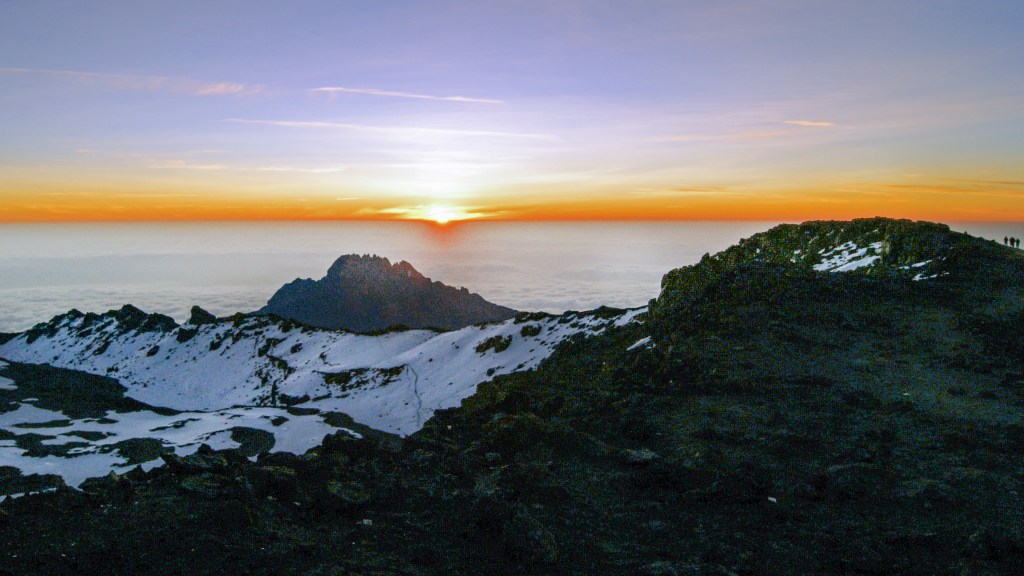
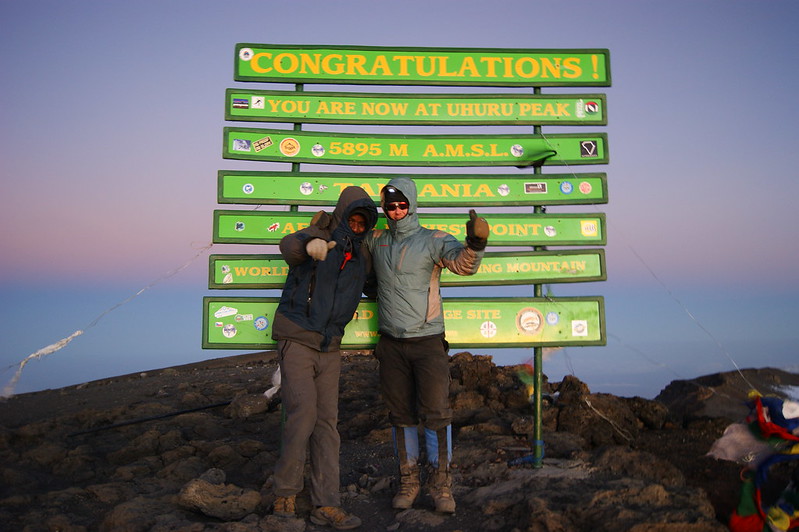
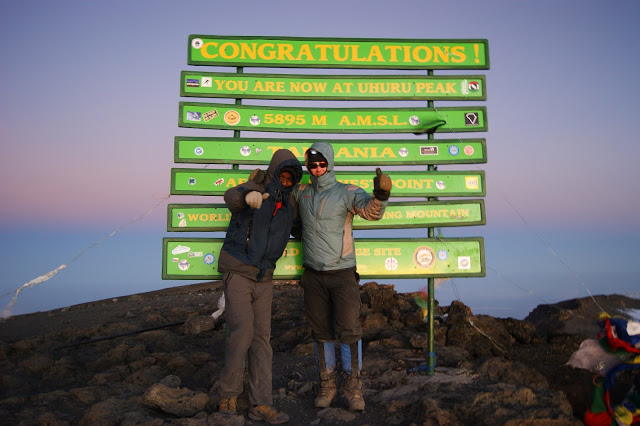
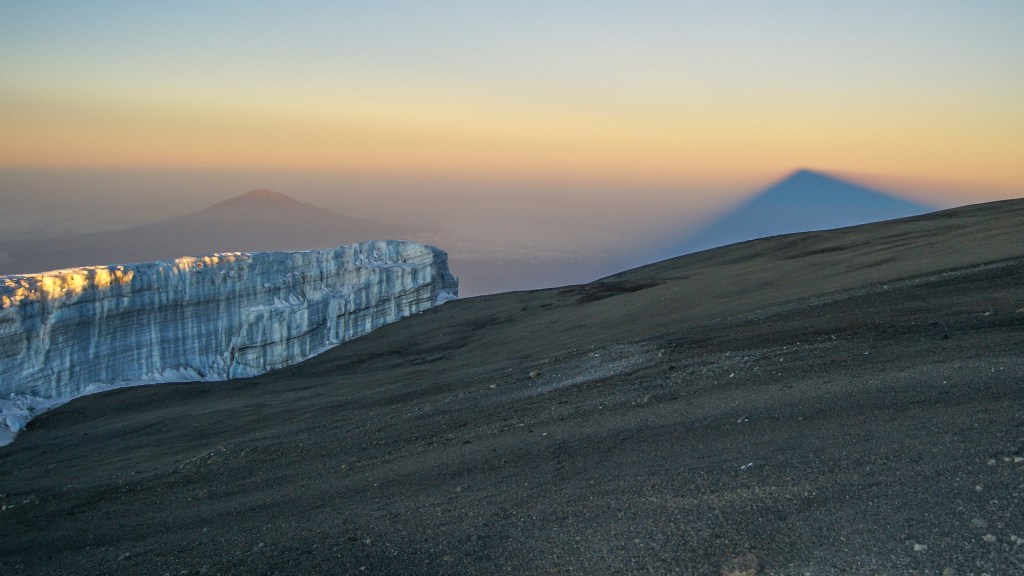
When we arrived at Uhuru Peak it was still dark, so we had to wait for sunrise. No problem, as a large group of noisy Americans already were there we now had take part in a battle for a place in front of the the large Sign on the summit. Everyone wanted their photo taken – alone- there, and some people became a bit desperate keeping others away starting yelling at others. I guess their climax of reaching the summit was a bit more than they could handle. In the end we got our photo, and before heading back down I got to see the sunrise over Africa from Uhuru Peak. This was our goal, and standing here now proved that everything had gone as planned. The impressive sight of Kilimanjaro’s shadow, an impressive mirage of the mountain is especially worth mentioning. The beautiful colored glaciers too, and for those who have the time and energy, the crater rim.
Returning back down, herds of people were now coming up. I met my Italian friends at Stella Point. Four of them made it to Uhuru Peak while one was suffering so bad from altitude sickness that he had no choice but returning. He didn’t recover completely before were came back to Moshi. Altitude sickness is absolutly a terrible thing to get, and as I forgot all about how high we were and started running down from Stella Point I got a reminder as a headache came sneaking up on me. I was exhausted when returning back to the camp at Barafu (4668 m), and I slept like rock for 2-3 hours. Coming down early gave me well needed extra time to rest.
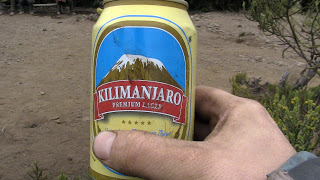
The headache vanished as I drank two liters of water – That’s a lot better cure than pills. Around noon we got warm lunch before starting walking all the way down to 3100 metres. This was hard on our knees after a long day on horrible paths. Coming down two the rescue hut at around 4000 metres I managed to buy couple of local Kilimanjaro Beers for me and Marko who assisted me to the summit. The celebration continued when we came down to Mweka camp at 3100 with a couple of more beers. My legs were tired now, and I slept feeling that my sleeping bag was like being in a hotel bed that night.
Stage 6 Mweka Camp – Mweka Gate
Distance 10 km. Duration: 3 hours Altimeter 3100 – 1800
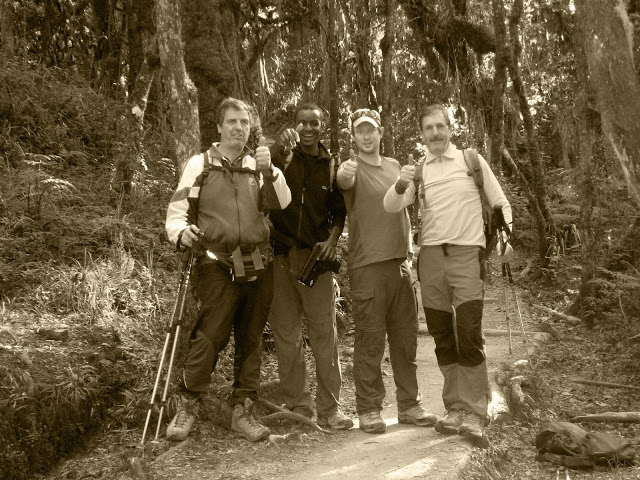
This was the last and most boring stage, even as we walked through some beautiful rainforest. After sleeping like a rock after the summiting the previous day, I felt well rested when the porters woke us up in the morning. After another great breakfast, we started the last “transportation stage” down to the Mweka village. Most of the way we walked on a well maintained path or road . We were promised to see some colubus monkies, but we were not that lucky. Still we were happy after a successful trip for most of us, and thinking about a warm shower, swimming pool and cold beers didn’t make us less happier.
Porters celebrating at the Mweka camp night at summit climb. In general there was a lot of singing on this trek. There were few silent moments.
When coming down to Mweka, we once again had to register with the park authorities. A large crowd of vendors sell everything from t-shirts, paintings to beers. Like most climbers I ended up buing one of thosetacky tourist t-shirts saying “Just Done it – Kilimanjaro.”
After our climb we received a certificate with our name and time of arrival at the summit to prove our achivements, a nice souvenir I felt.
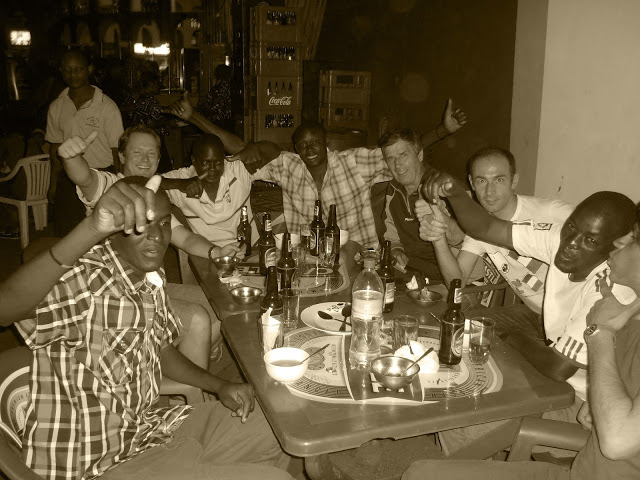
After the climb we were all driven to a hotel called Kilimanjaro Crane Hotel. It was a central lying hotel with a friendly staff.I spent the afternoon lying at the pool, before I met up with my Italian climbing mates, our guides and porters in the evening. Together we celebrated into the night, and it was great experience to take part in the Moshi nightlife.
The next day my guide and a few of his staff came to the hotel to pick me up. He wanted to show me his village and invite me for lunch in his house. It was an enjoyable time, and I got to met his lovely wife and children.
In the afternoon I had still a couple of hours left before my ride to the airport. So I went for shopping in Moshi town, but after a only half an hour I had enough as a tail of curious Africans followed me everywhere, and all the way back to the hotel. Still I managed to buy some typcial souvenirs to bring with me home. Early evening a buss from Zara Tours came and picked me up at the hotel. The drive to the airport was nervewrecking – You can’t believe how the Tanzanians drive. They actually have a huge problems with traffic killings. However what I will remember the most from the drive back to the airport was seeing in Mount Meru in sunset. Maybe I will go there one day?

 Eventyrland