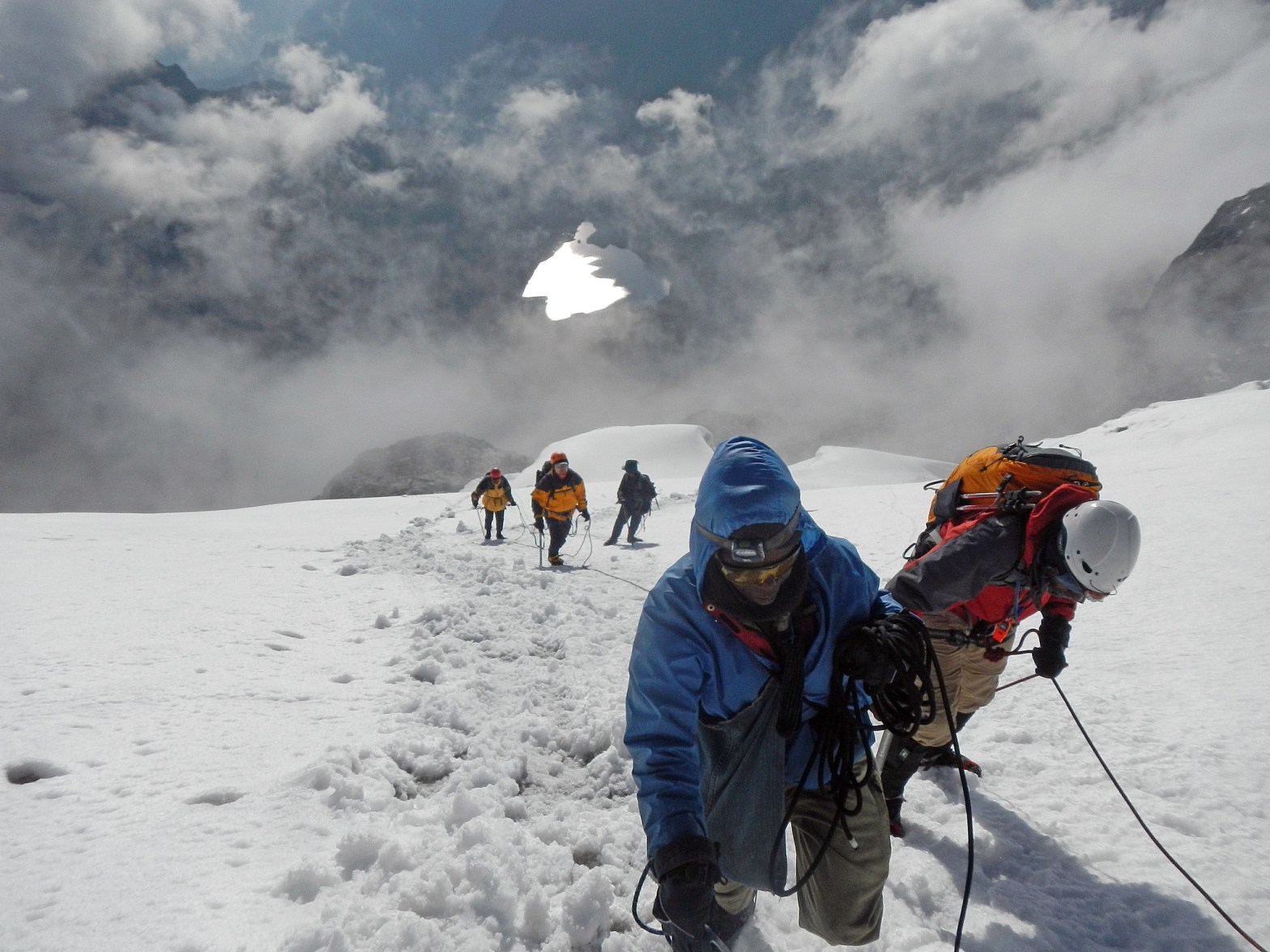
Posted first on jorneriksson.no in 2013, edited in 2020. Author: Jørn Eriksson
Jørn Eriksson has written about his adventure, alongside his friend Andreas, climbing Mt. Stanley and Mt. Speke in the remote Bujuku valley on the border between Uganda and Congo.
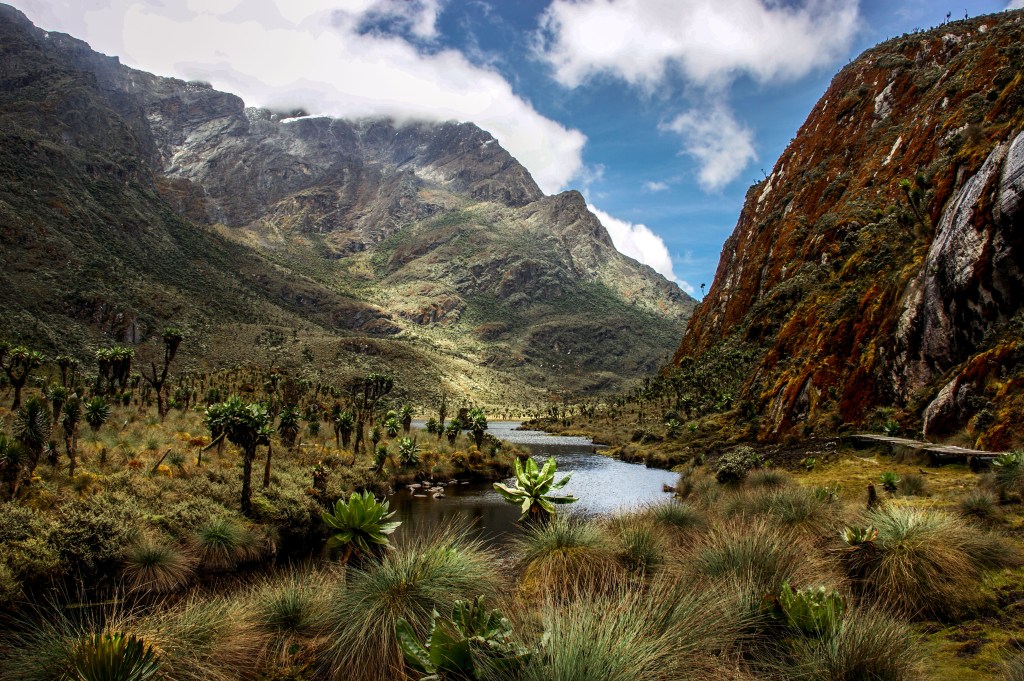
In year 200 a. c., long before any known European had set foot in deep Africa, the Greek Geographer Ptolemaios claimed that the Great Nile had it’s source from some big mountains he called “Mountains of the moon.” Many hundred years later it was confirmed that he was actually right, as the mountains do supply water to Victoria lake where the Nile runs from. Many life times after Ptolemaios we trekked for 8 days long through these epic mountans called the great “Mountains of the Moon” in Uganda.
They are perhaps the most scenic mountains and with out doubt the biggest range in Africa. From the deep jungle, we walked to the summit of the “Rainmaker” Mount Speke, Africa’s 4th highest mountain, over Arica’s largest glacier and to the summit of Uganda and Congo’s highest mountain, the Margerhita Peak at Mount Stanley that is Africa’s third highest mountain.
This is a hard trek that was much more challenging than my last trip to Africa, at Kilimanjaro. I am not talking about the fact that these mountains are more technical than Kilimanjaro where one can walk to the summit, but the that one have to struggle through thick jungle, bogs, mud, rain and in general very wet conditions. We had on gum boots more often than mountain boots.
Day 1 – Getting there
The previous year I did the mistake of booking a flight out Europe from Amsterdam. A little snow in Netherlands nearly set an stop to my entire trip to Africa. This time I went directly from Oslo to Doha, and from there to Entebbe. I really liked Qatar Airways, and they are flying to lots of interesting destinations all over the world. Our two flights went as scheduled, and we arrived in Entebbe on time. One thing I will never forget is when we fly over the African continent at night. In Europe there are many lights to see below everywhere, but in Africa there was nothing but darkness. Electricity is a luxury.
Day 2 – Driving to Queen Elisabeth National Park
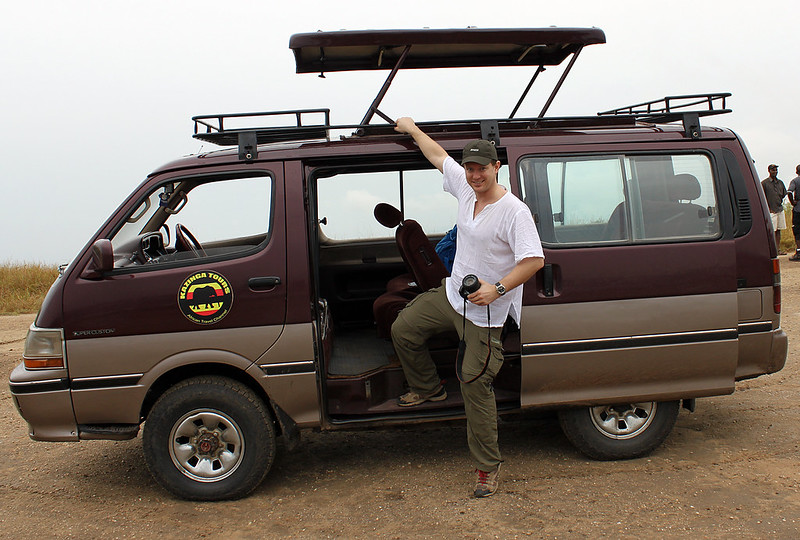
It was what the Africans call a cool morning in Entebbe as we met up with our private driver and safari guide on the airport. As a Norwegian I was suprised that it was so cold that I needed to zip up my fleeze jacket. After getting some local valuta in the airport we were soon settled in 4WD Hicace heading west to the Queen Elisabeth National Park, a nearly 2000 square mile big wilderness oasis at the foot of the Rwenzori mountains. However after just half an hour the driver decided to take a ferry someone tipped him about , claiming it would take us an hour to drive around the bay. Certainly as one could except in Africa, this was not a good idea in regard to time. The whole ferry operation took nearly two hours, but at least it was a great experience.
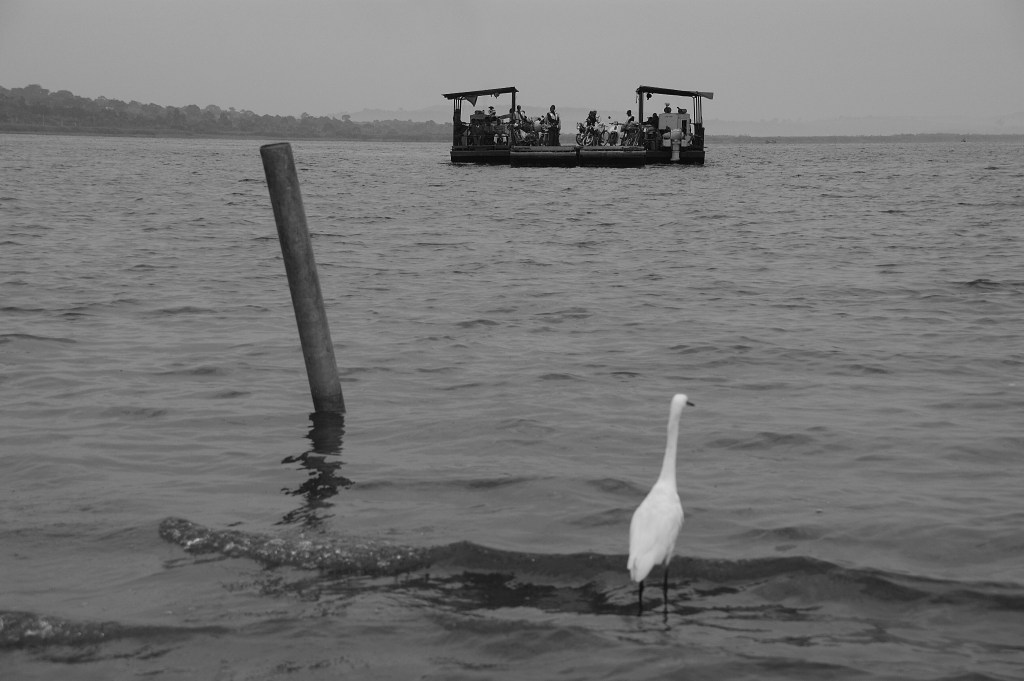
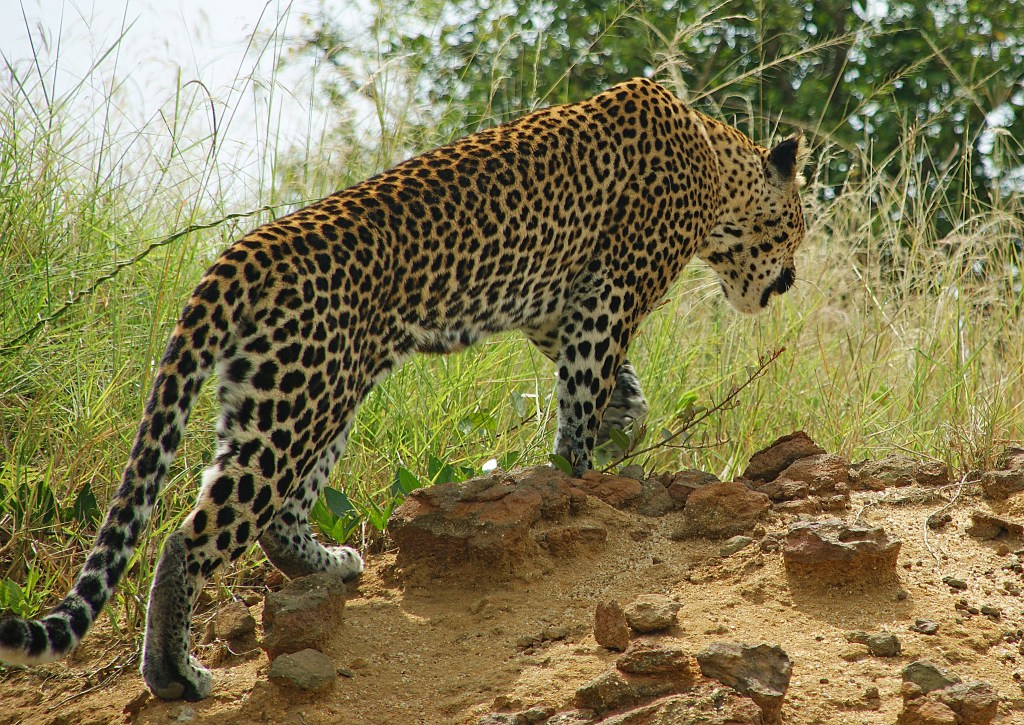
We mingled with locals that were curious about these to mzungus (mzungu is african nickname for white people. Some of the men on the ferry was very suprised over the fact that we were both in our mid-thirties and having no children. One of the men was 38, and he had already 10. Our driver jumped into the discussion saying that he had 25 sisters and brothers, but that things are chaning in Uganda. People have less children now than for just one or two generations ago. While discussing this we were all dressed up in life wests. The ferry was old and Africans are poor swimmers, so this was probably wise. After this interesting ferry-ride we were back in the car driving through some very interesting and green landscapes. Villages were lying as pearls on a string along the dirt road were were on. After an hour or so we came to what the driver called the highway. The only difference between the road came from and this was that this had asfalt. Our next stop was at the equator. This was actually a line in the road. We came from south and was now in the norhern hemisphere. We stopped for food and drinks twice on the road. We stopped several more times to take photos of things we spottet on our drive. A variety of animals, including zebras, stunnig scenaries, busy villages and towns were regular impressions. After 11 hours we reached the exotic Victoria Bush Lodge at the shore of Kazinga channel. Hippos were grassing outside our logde in the evening not making it entire safe to wander around. This was suppose to be our resting day, but instead it became a 12-hour long chase after lions. We started driving around the park already around six am. It was pretty cold with temperatures just above 10 celsius. We spottet many animals but no lions. After lunch we were lucky to spot a leopard only metres away, and on an afternoon boattrip on the river we got a safari-overload seeing hundreds of buffalos, elephants, crocs and so on. However our guide didn’t want to give up the lion hunt, so we went back to where they were likely to feed,and almost gave up when we late in the evening finally spottet a female leader in the grass .
Day 4 – Driving to Rwenzori, Starting Hike
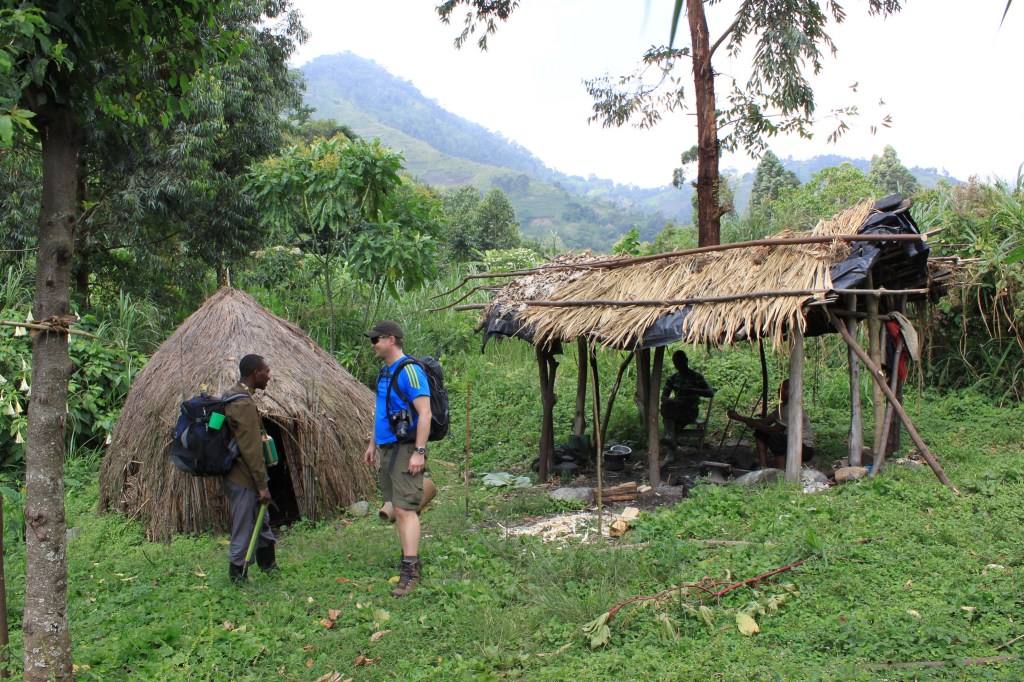
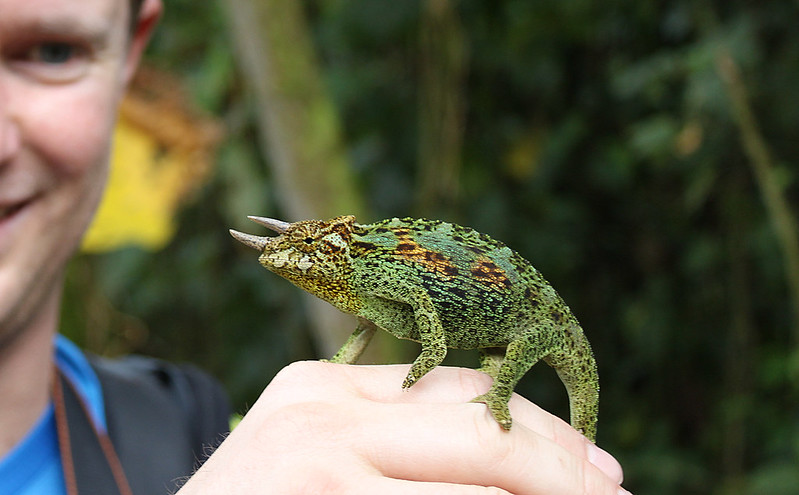
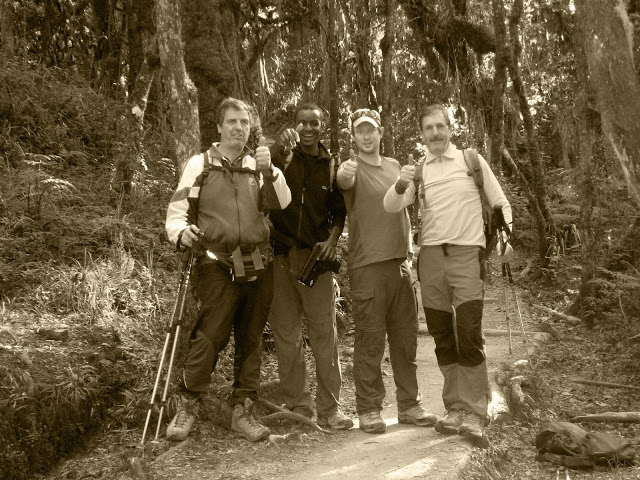
We were now excited to start our trek, and willingly jumped into the car around six that morning. On the way we spottet some hyenas in the road, making our safari experience complete. About two hours later we were inside the gates of Rwenzori Mountaineering Services in the village of Nyakalenjiga where our hike would start. After agreeing with the company on money-related issues, having weighed our equipment and gotten the porters we needed we where ready to walk. It felt great to walk out the gate, and sign in to the park. (and yes, like on Kilimanjaro you need your passport number with you). We were now 14 porters, 1 cook, 2 guides, a student, and two clients that were us. All together we were 20 people heading for a 8 days long trek up the Rwenzori Mountains, only because two people from Norway, Andreas I wanted to climb two mountains. The walk went along Mubuku river surrounded by rainforest much more impressive than what I witnessed in Kilimanjaro. The trees were gigantic. Along the way we played with chameleons, got bitten to blood by agressive red ants and heard the sounds of the Turacos in the trees. Often one can hear chimpanzees shouting from the forest on this stage. But we didn’t.
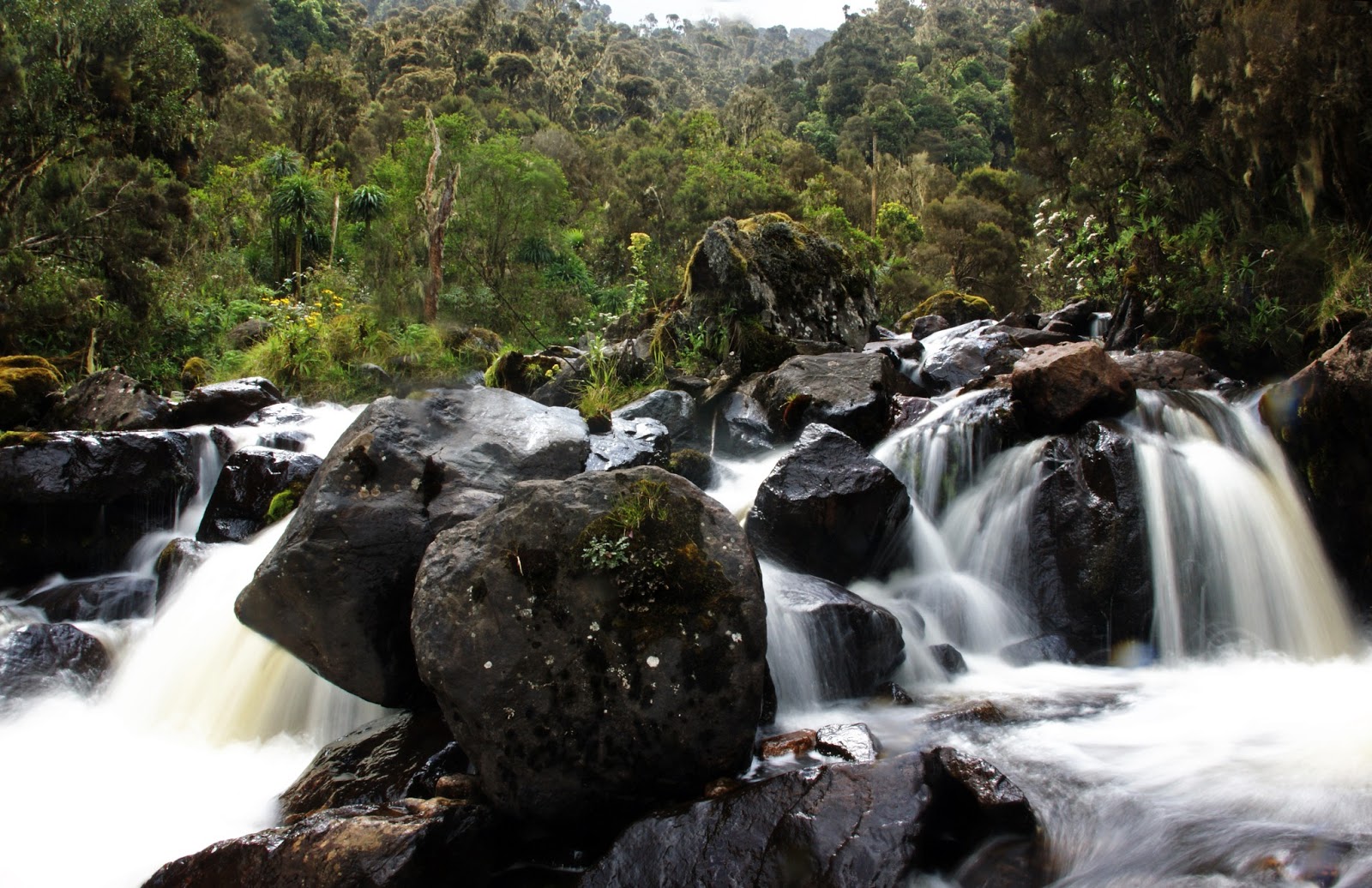
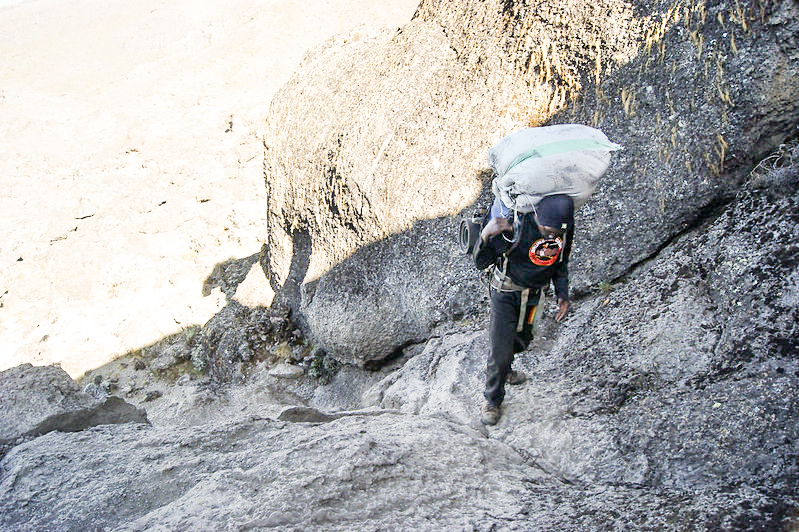
The sun was strong, and it was very hot. We didn’t get as much shadow from the trees that one could hope for in a rainforest. Thus, this was a hard leg. We walked 1000 altitude metres in four hours. Actually I advise you to spend longer time on this leg. The reason is that you will arrive the Nyabitaba hut long before your crew. There is not much to do at Nyabitaba except wait on a bench. This place is also suprisingly cold lying on ridge exposed for wind. Therefore save your energy, and enjoy the nature. It also turned out that the porters had forgotten our food. Some poor fellow then had to run all the way down to the village and back up again to get it. Can you imagine? There is clearly nothing heroic about people doing treks like this, when you experience the hard work of the porters here, and on other mountains.
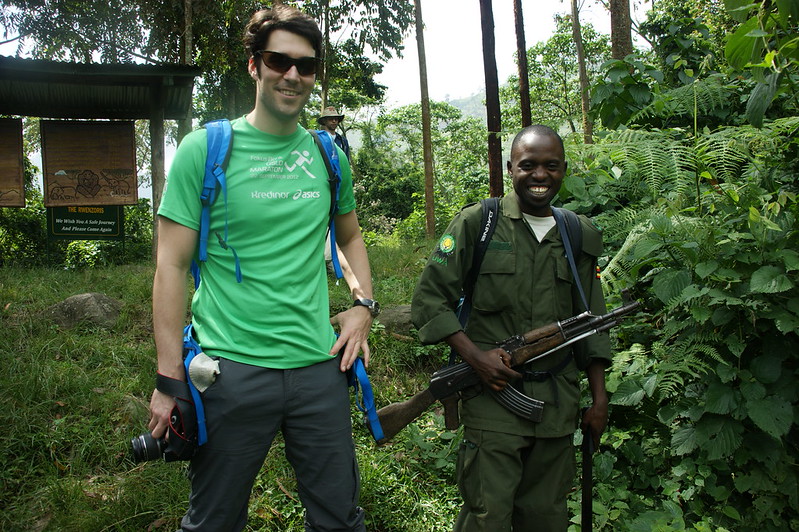
Day 5 Hike to John Matte hut
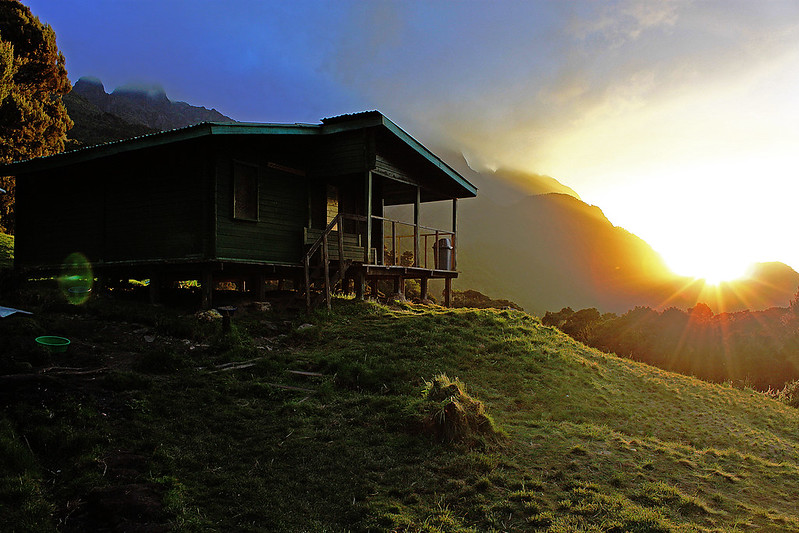
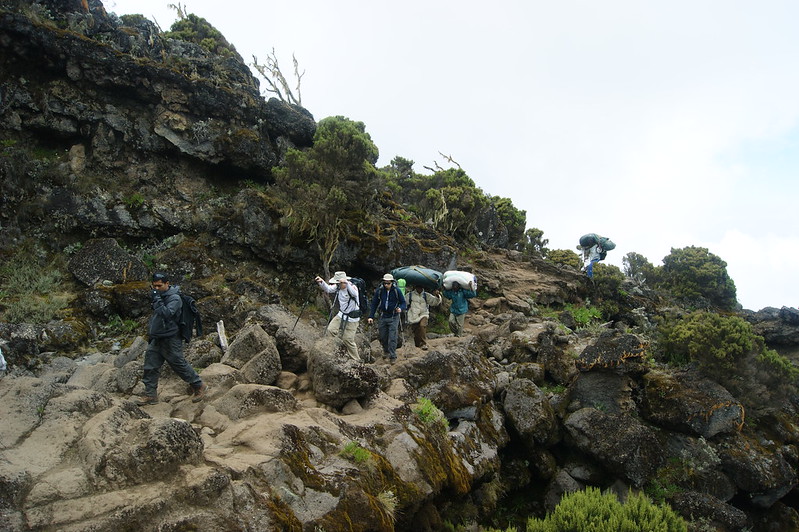
The following day we climbed 700 alitude metres using six hours in some hectic terrain with slippery roots, and bamboo-forest. At least the nature was beatiful, and in the forest we could hear the screams of monkeys warning their friends about the sweaty two Norwegians, and 18 helpers coming. Eventually we could see the snow covered Mount Stanley and it’s peaks. This felt good as it’s always nice to be able to see what one is aiming for.
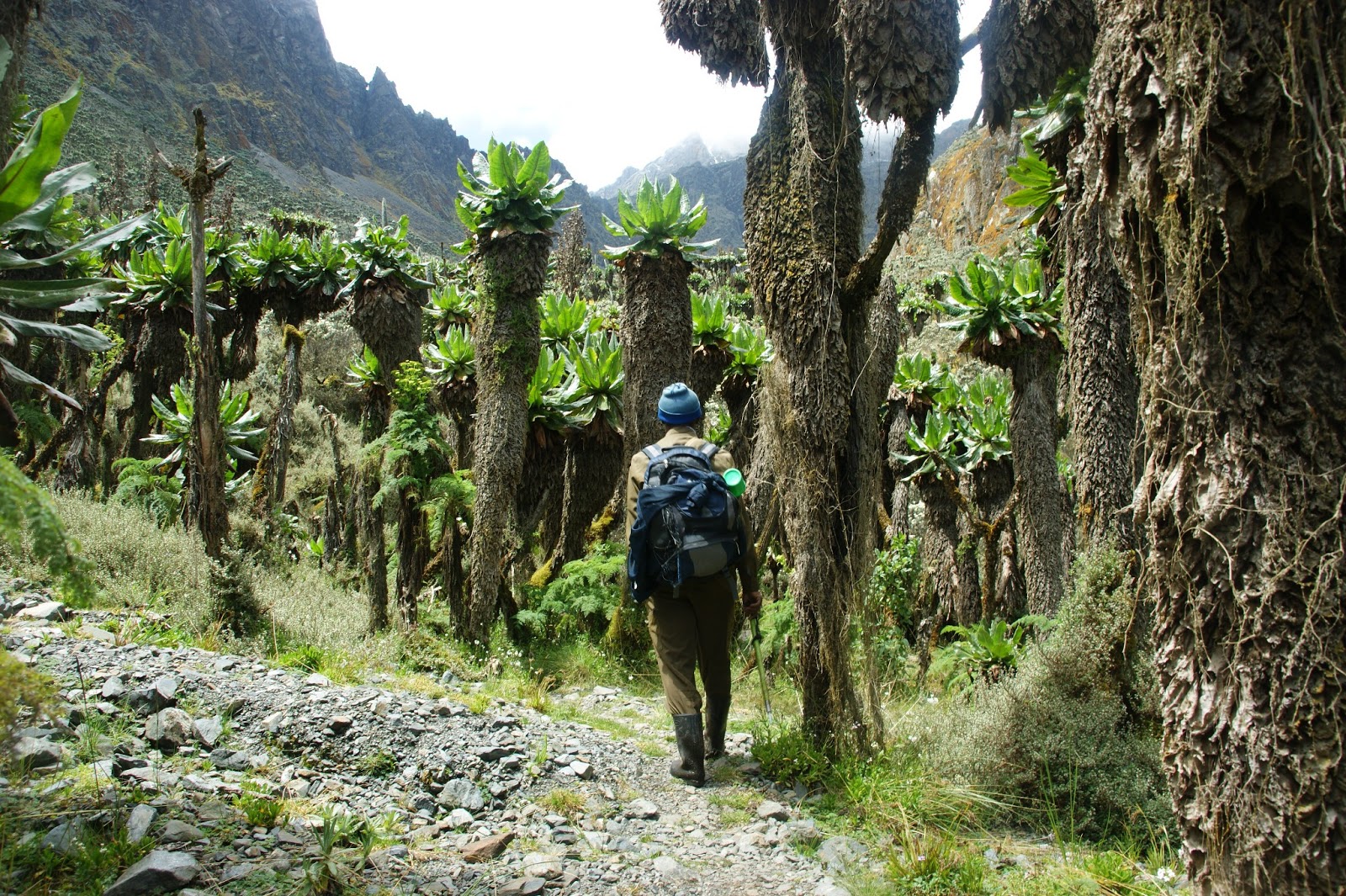
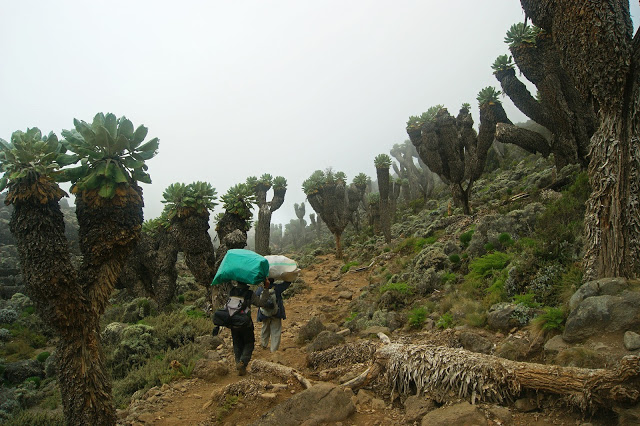
The vegetation zones where also changing this day, and we entered a forest of giant Lobelias, much greater in numbers than what I saw on Kilimanjaro. It’ was like being in a fairytale.
When we reached John Matte hut on 3380 masl. we didn’t feel very good. We both had headaches, and I wondered if it was because of the altitude (I never had problems with altitude sickness) or the fact that I was heavily burned by the sun in face and ears. As the evening fell on we felt much better, and I didn’t experience such problems again on this trip. However we decided to slow down the following day. By the way, John Matte is a cosy hut in beatiful surroundings and with wonderful morning view of the sunrise behind the Portal peaks.
Day 6 Hike to Bujuku huts
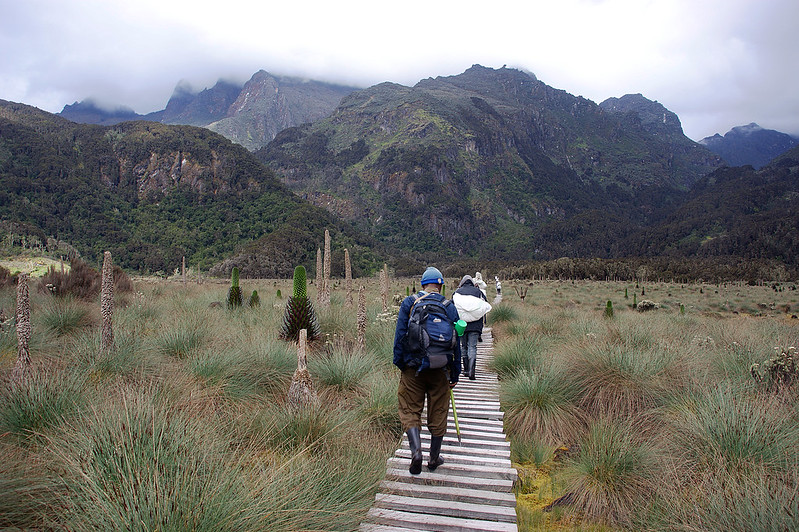
This day we walked through the classic terrain Rwenzori are known for, walking through the bogs, and especially the Lower Big Bog. Our mountain boots were packed down, and on our feet we had good old gum boots. I bought mine in the village, and the soles were so thin that it felt like walking barefoot. This no easy stage on the Rwenzori trek, and I almost broke my leg as it went between the boards on the board walk over parts of the bog. Lesson was learned. Attention had to be given at all times. After a few hours hike we arrived at Bujuku lake, an extraordinary scenary. Still hiking here killed the excitment, as it was no walk in the park, but in deep mud. We arrived Bujuku huts early afternoon. This would be our starting point climbing Africa’s 4th highest mountain.
Day 7, Climbing Mount Speke (4890 masl.)
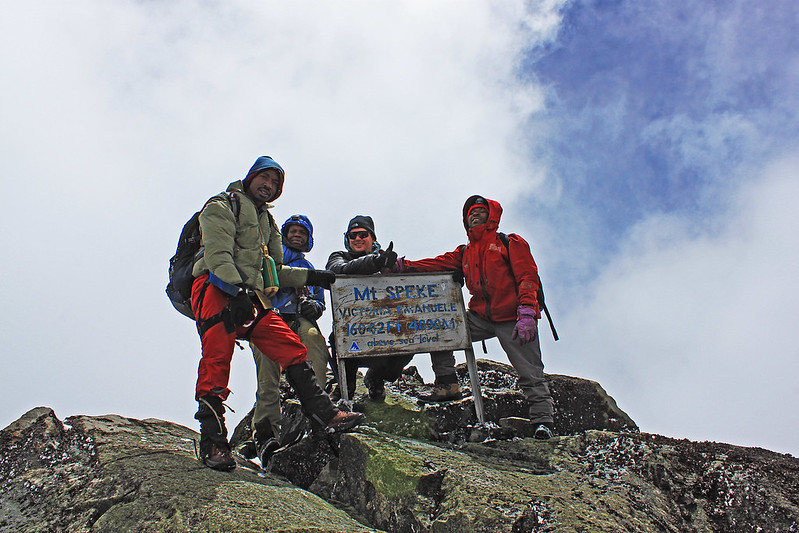
It normally takes 3 days to hike up to Bujuku Huts that are base camp for this climb. From Bujuku you need a full day for the climb. There are two normal routes (2013) to the summit. One is considerable longer but involves only scrambling Grade 3. The most common route is a grade 4 route and a rope should be carried, and put to use if ice and snow. Crampons and ice axe are needed on this trip. However we didn’t use the crampons since the snow on the glacier was soft. It is recommended to use rope ascending and descending the crux of the route any way. In difference from Mt. Stanley there are no fixed ropes on Speke. We spent 5 hours climbing up including pauses, but I am not certain how long time we spent going down. It was just not a concern of mine. My guess is 3 hours. At Bujuku the elevation is 3960 masl. at the summit it’s 4890. That ment that we had to climb 930 altitude metres up to almost 5000 masl. Obviously this would be a though day in this altitude. We started walking about 5 AM in complete darkness. First we ascended up to the Schulman pass following a good path. The slope was easy. At some point the path seperates, and we turned right, and the terrain started to get steeper. Not long after we reached the first of the two sections where a rope should be considered on this route. However it was dry conditons, so we easily climbed up without. It was very dark, so it felt way more exposed than it really was. At the top of this slope we had to climb around a hanging three and then traverse in easy but exposed terrain until the slope got very gentle.
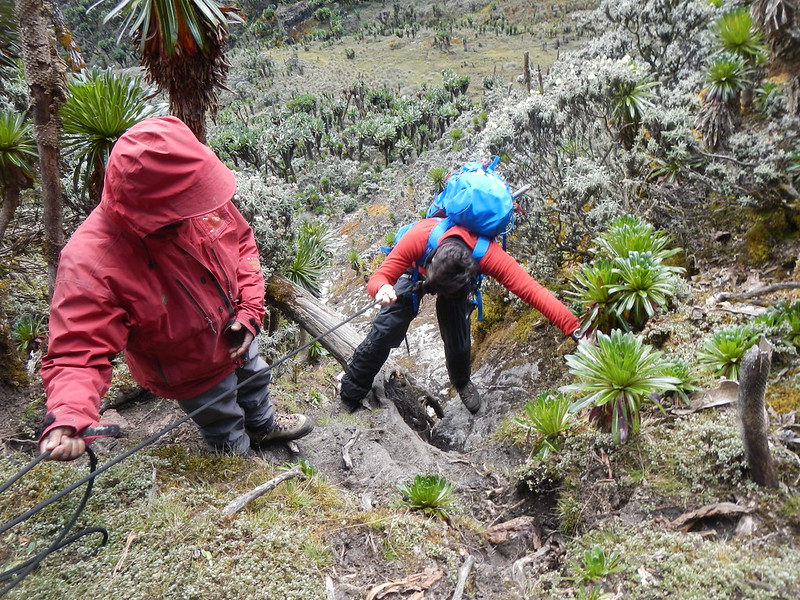
In the west one could now view a wonderful lake (Lake Speke) on the Congo side. However we couldn’t see it going up (We had clear and sunny weather going down) as a storm came over us. As we walked through some boulders heading for the crux of the route, a steep and icy upper section on the ridge we were now on, The wind was now so servere that we had serious doubts about continuing. We found shelter behind a huge rock and some discussion about what do to do. The most experienced guide put on crampons and the other guide went with him to secure him. The conditions were now extremely difficulty, and we watched with great concern. We didn’t bring helmets on this trip, but that is something one always should consider, as a big rock came falling down towards us. Luckely we all escaped it. I was told that rock fall was not very common on this route, or in Rwenzori, but one never know. Anyway, he managed to put up the rope, and a student guide (we had 3 locals with us) climbed up the rope without using a prusik. The result was scary. the student had problems on the icy rocks getting good grips and almost fell. I was properly secured to rope behind and came the student to rescue. I used an ascender on the rope, and with this I had no problems climbing up.
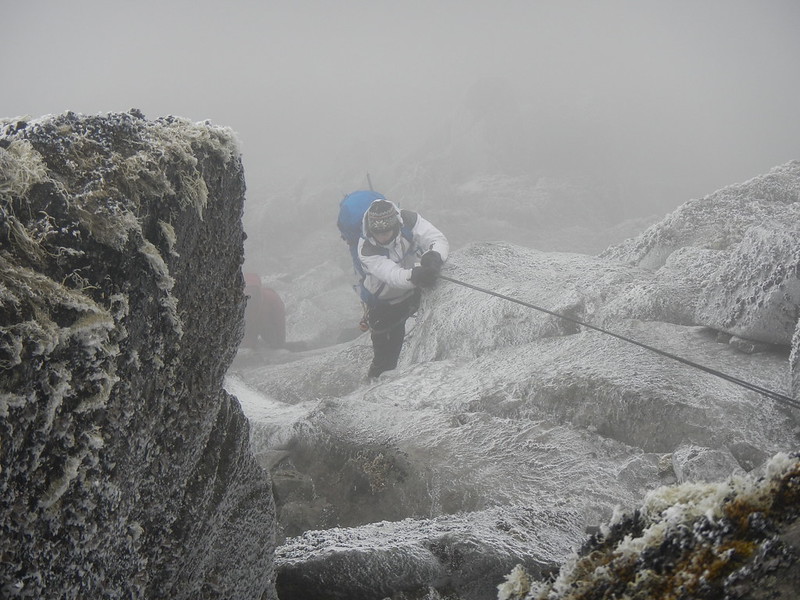
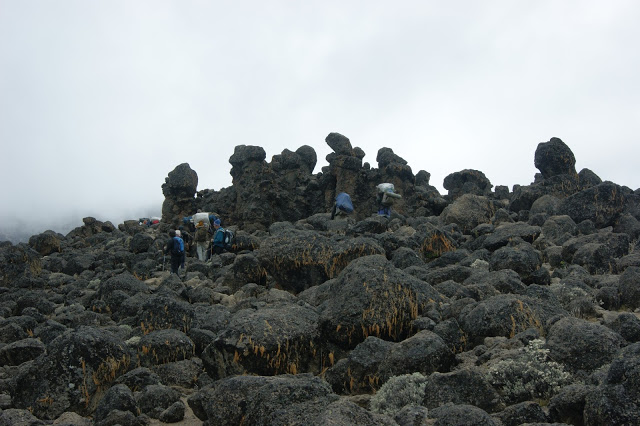
At the top of the rope, we stepped right and up an icy gully. We left the rope at the gully, and the rest of the climb was mostly a scramble with som exposed sections. It was still blowing strongly and we had little sight ahead. So our guide spent much time finding right way. At last we entered the snowfields on the upper glacier. The snow was soft, so we didn’t put on the crampons. As we came closer to the summit the weather also became better, and suddenly we got some brief moments where we could see Mt. Baker. Bujuku valley, Congo and Mt. Stanley. We continued our scramble going left, and before I even realised it we were at the summit.
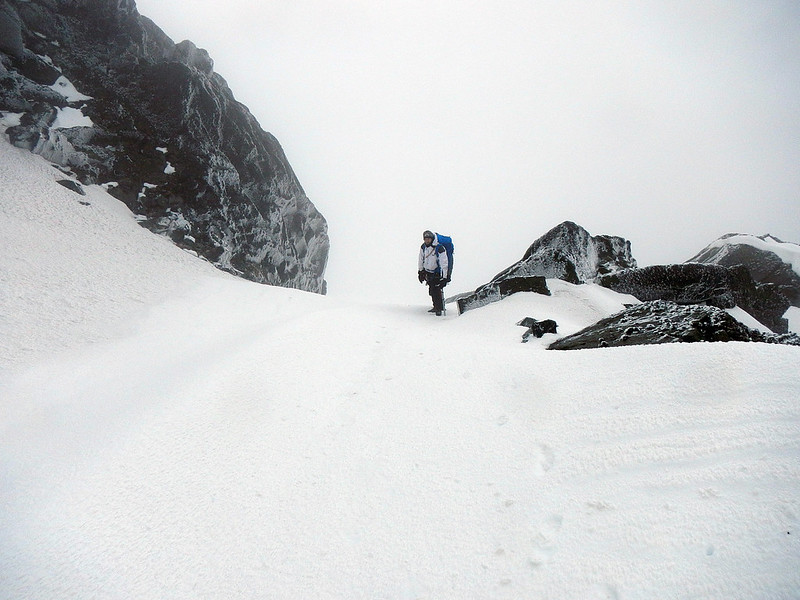
There was good flat area a few metres below the summit that gave good shelter for the wind, and room for the five of us to have something to eat. Going down we abseiled the two steep sections described earlier.
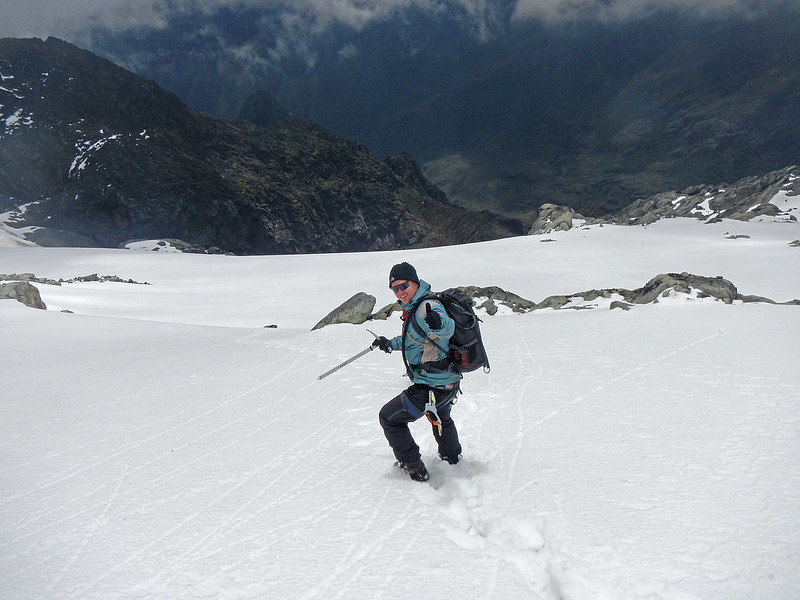
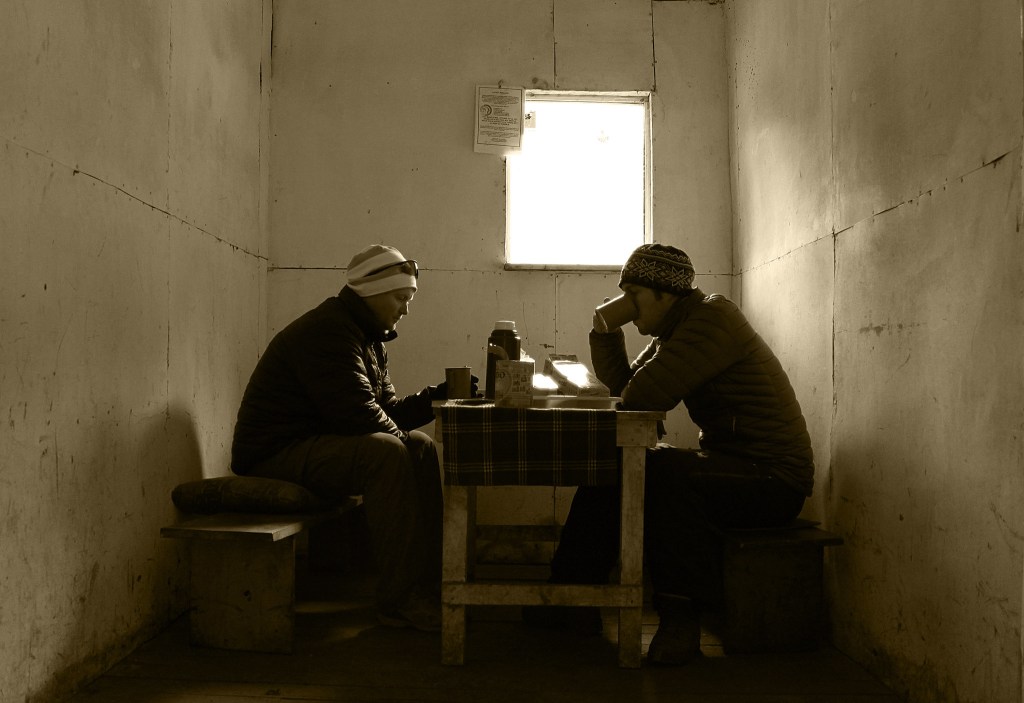
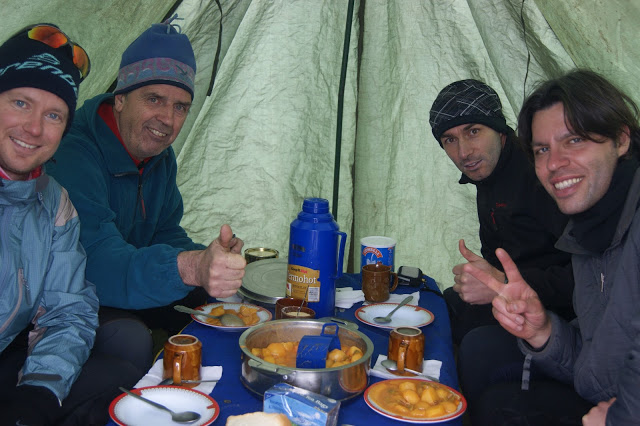
When we came back to Bujuku hut that afternoon we were not longer alone. Kenya Mountain Club had arrived with a group of five people. However they were not more than one Kenyan, as the others were Swedish, American, from New Zealand and Uganda. This group followed the same plan as us until after Margherita peak, staying in the same huts and rooms. This ment that we now had to make some new friends.
Day 8 Hiking to Elena Huts
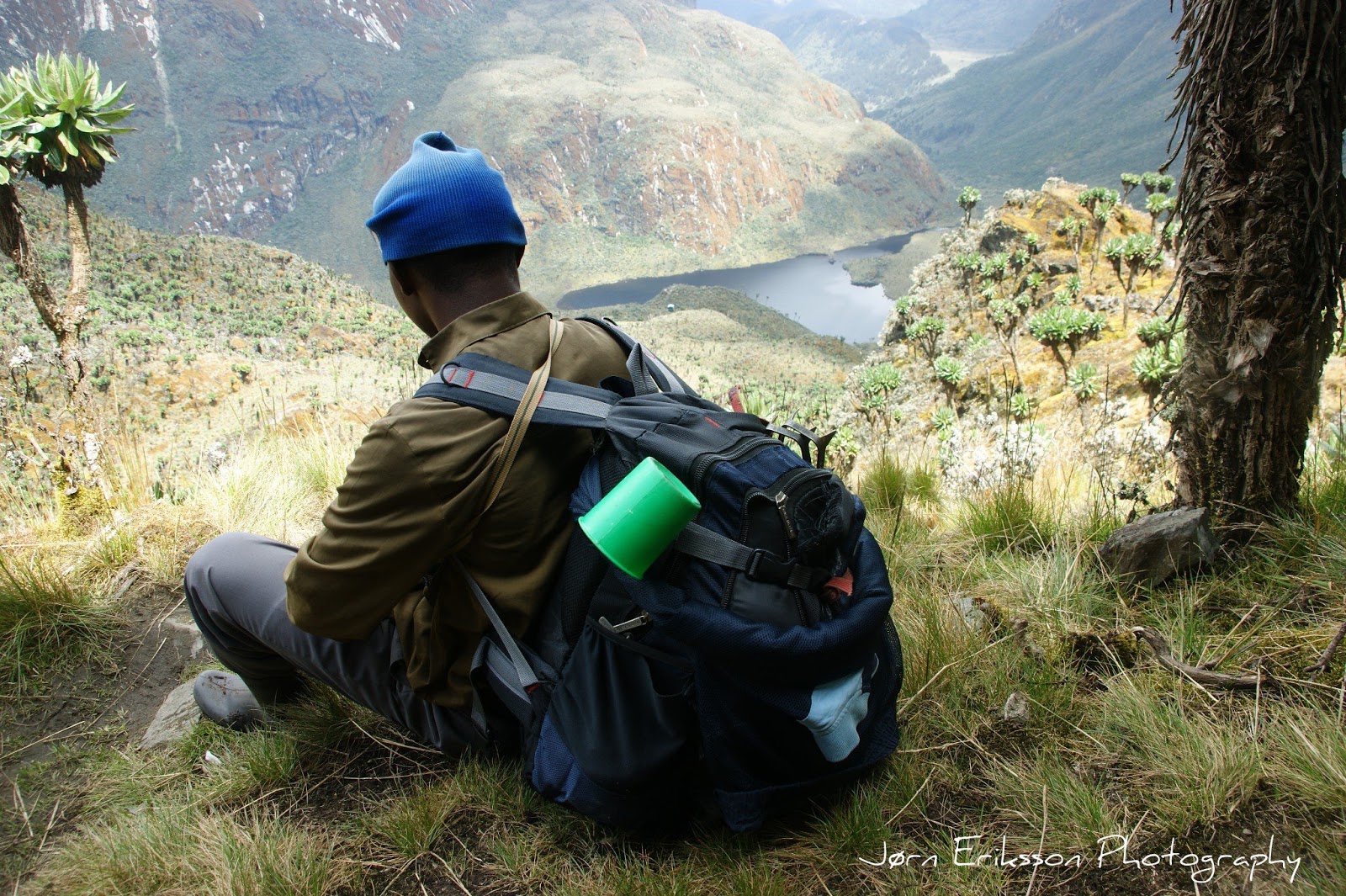
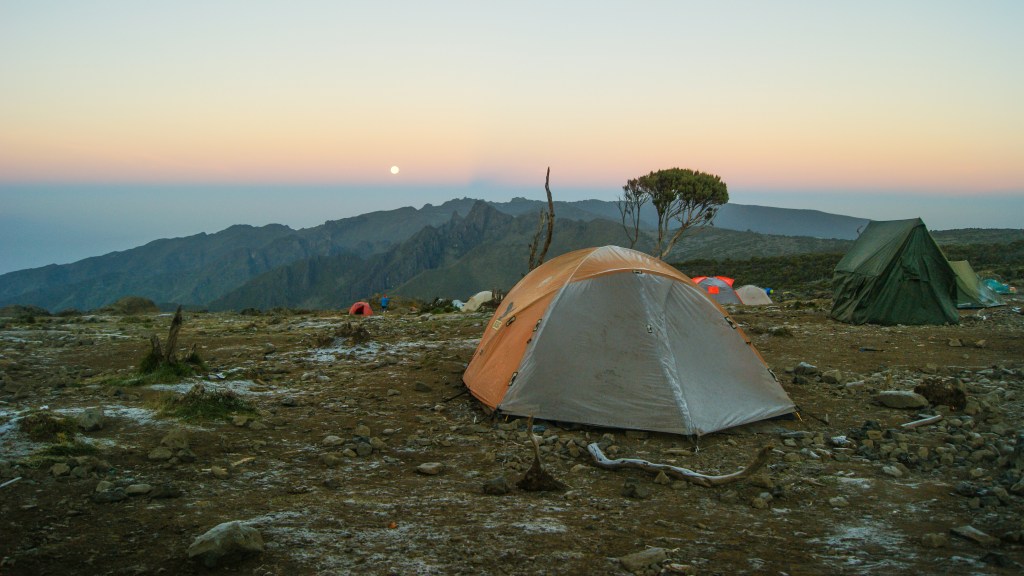
We slept long the next morning, as we only had a short leg going up to our basecamp for the climb of Africa’s third mountain, Margherita Peak on Stanley. Climbing a steep hill leads the way up to the Alpine zone of Mt. Stanley. Behind us is the wonderful Bujuku valley. There is no running water at Elena huts, only still water in a few pits. This taste bad, but the porters drink it. We did too, but not without boiling it. The Elena huts it not a pleasurable place. The conditions are poor, and reminds you that the only reason you are here is to have a final rest before push for the summit.
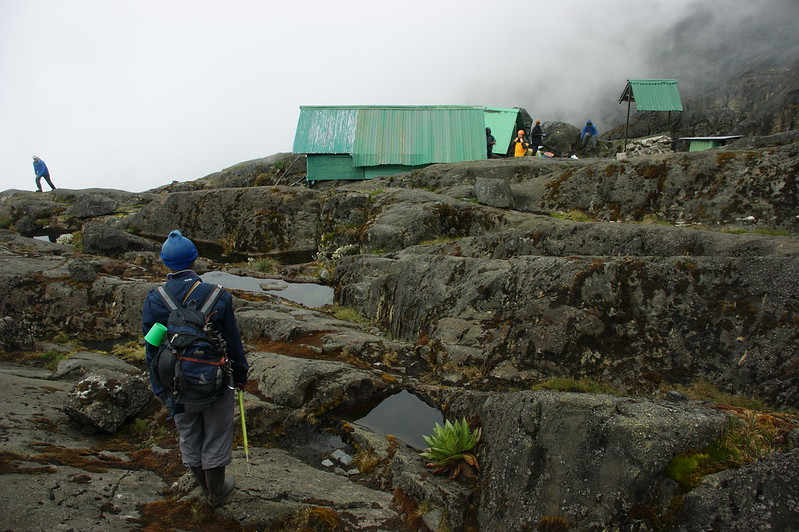
Day 9 Climbing Marherita Peak, Mount Stanley (5109 masl.)
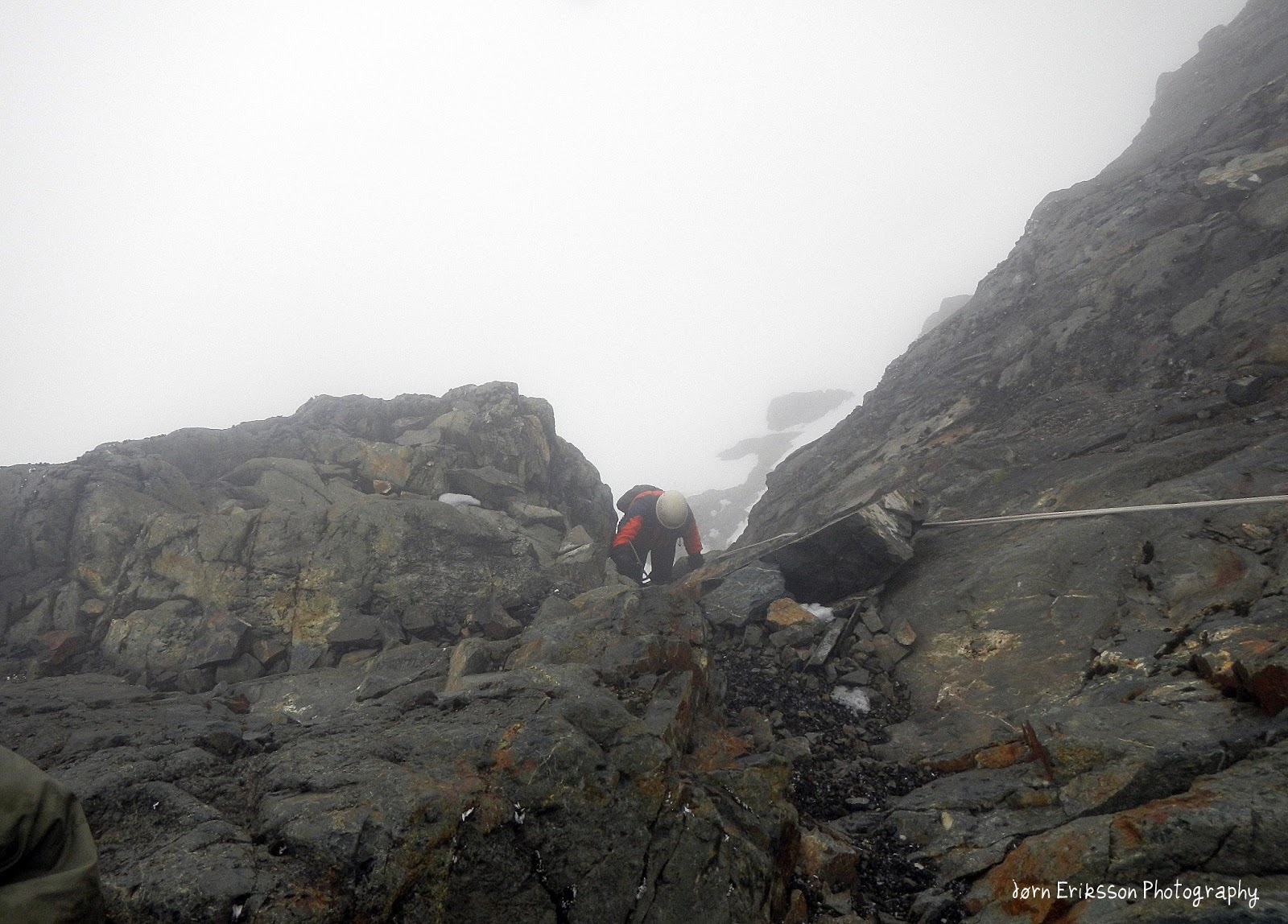
With an elevation of 5109 m it’s the highest mountain in both Congo and Uganda and the third highest mountain on the continent after Mount Kenya and Mt Kilimanjaro. The peaks are actually high enough to support a glacier and it was named after explorer Sir Henry Morton Stanley. It’s part of the UNESCO world heritage site that is Rwenzori Mountains National Park and was first summited in 1906 by Duke of the Abruzzi and his fellow climbers and was named Margherita Peak after the Queen Margherita of Italy.Mount Stanley is a mountain that should be taken serious, since there are no easy escapes down the mountain if altitude sickness or any injury. The help could be days away, and there are no medical support on the Mountain. We reached the summit in February 7th. As the glacier declines in high speed, most written route descriptions are not very useful as the guides has changed the route from Margerhita glacier and up to the peak. Even route descriptions being recently new is out of date. The only guidebook written on the topic does actually not describe this route since it was last updated in 2006. Earlier a ladder was used to get off the glacier, now it’s a new crux traversing a few metres on some narrow outcrops before ascending up a fixed rope that will bring you up on the North West Ridge. When you read this, things can likely be different.
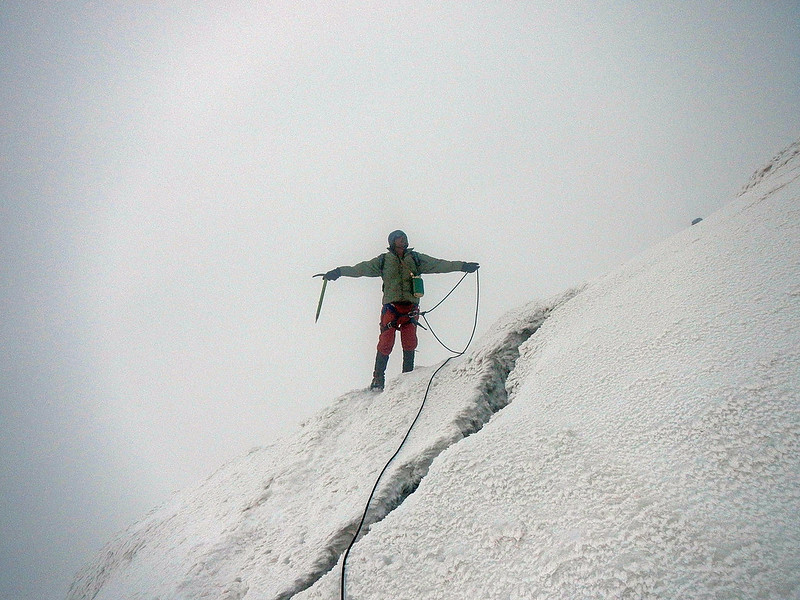
I found this climb less streneous than Mt. Speke. The climb starts at Elena huts on about 4500 masl.We started the climb in complete darkness, and it didn’t take long before we reached steep ground, and a fixed rope, leading to the Stanley Glacier. The glacier is a pleasent walk on a plateau, roping was not needed, and snow was not very deep. Now the sun was up, so we could actually enjoy walking. Still the mist didn’t give us much view. After a while we had to descend from the glacier around the foot of Alexandra peak, using another fixed rope (very good grips). From here we walked to the foot of the Margerhita Glacier where we put on crampons and roped up.
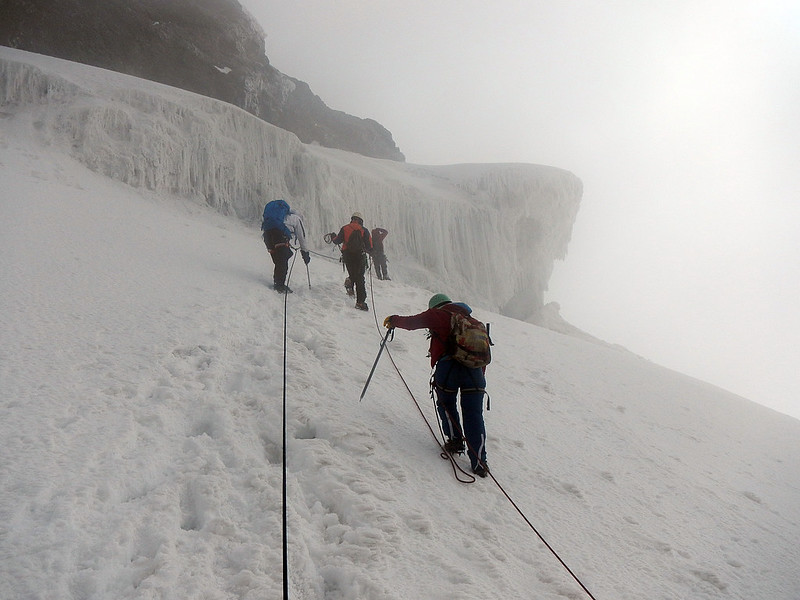
The Glacier is pretty steep. At one point I lost the camera on the snow, and had to throw my self after it like soccer goal keeper managing to save the precious photos before it descended to into the unknown. At this point the mist liftet and for about 10 minutes we had blue sky, sun and a clear view of the Bujuku valley and the two peaks Margerhita and Alexandra. It was a great scenary, and my best memory from the entire trek.
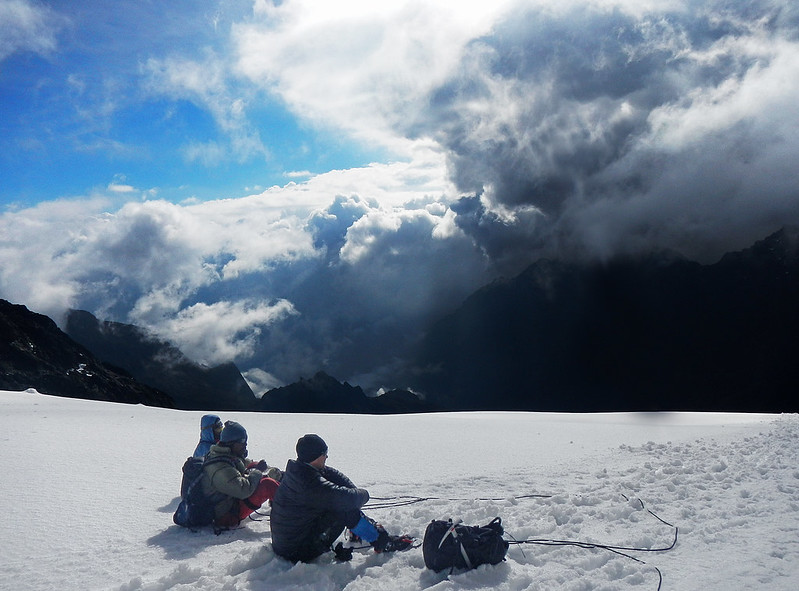
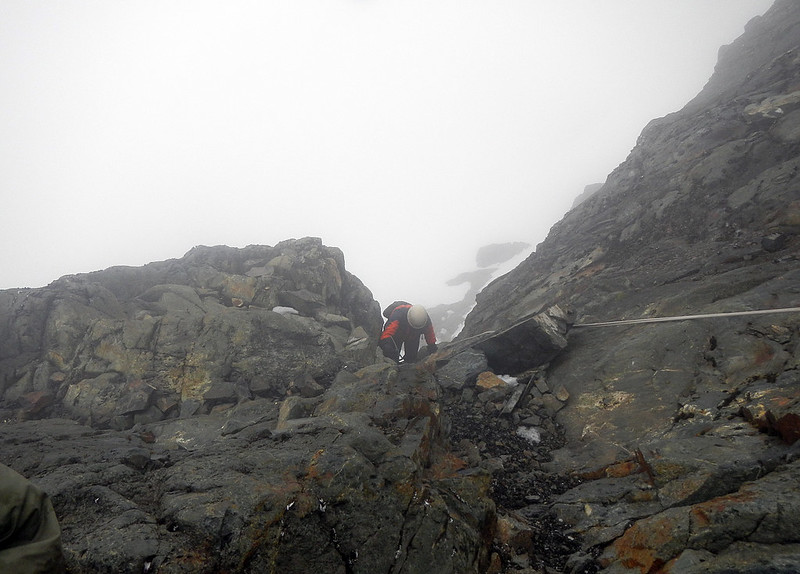
At the upper parts of the glacier we traversed left over a cravasse on to a narrow ledge of rocky outcrops leading to a steep gully with a fixed rope. This section is the crux of the climb and pretty airy, and when we descended the rain we got had made the icy rocks very slippery making it difficult to traverse the ledge. It’s a grade 5 YDS, but a very short section. This route is fairly new and has only been in use the last few years. As the ice melts one will need to find new routes also in the future. As we came up the fixed rope the party was still roped together as a fall would be fatal. We then left the rope and took off the crampons as the rest of the way to summit was only a scramble. However it started raining when we were at the summit making me regret that I didn’t bring the crampons up, because the water on the icy ground made the descend very unpleasent here.
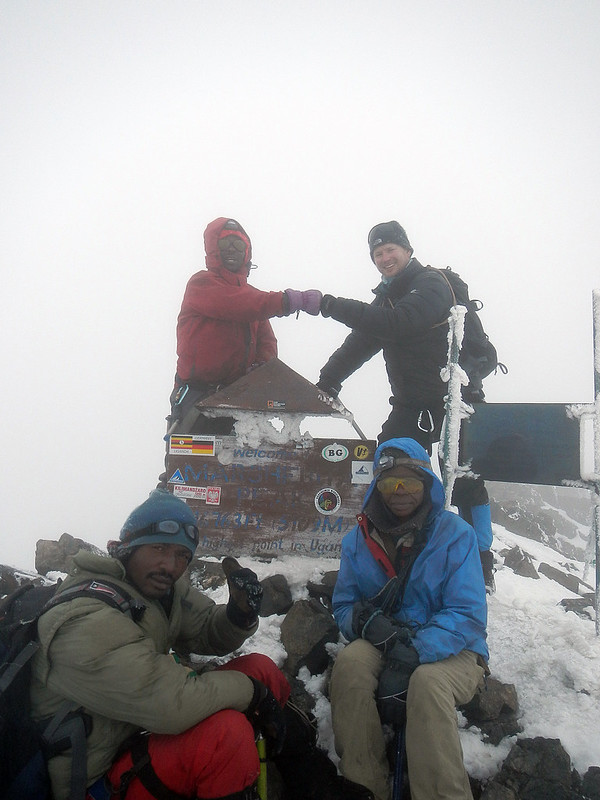
There was good room at the summit for photos, and we traversed the summit ridge further behind the big plate to a small cairn that shows the border between Uganda and Congo. This is a very exposed area so we had to be careful, and only two people could stand in Congo at the time as there was no more room, and steep drops on all sides.
We followed the same route back, having an half hour break at Elena Hut before trekking 4 hours down to the beautiful Kitandara lake.I injured my knee going up to Margerhita (early in the morning), and at this point the knee had swelled considerable, and I was not able to bend it. This made both me and our guides very concerned about the extremely long stage the next day back to Nyabitaba over Freshfield Pass (ca. 4200 masl). The scenary around Kitandara hut was breathtaking, and I guess I should celebrate that I now have added Africas 3rd and 4th highest mountain to my peak-list. However not being able to bend my knee made very concerned about the full day hike to Nyabitaba next morning.
Day 10 Over Fresh Field Pass 4282 masl. back down to Nyabitaba.
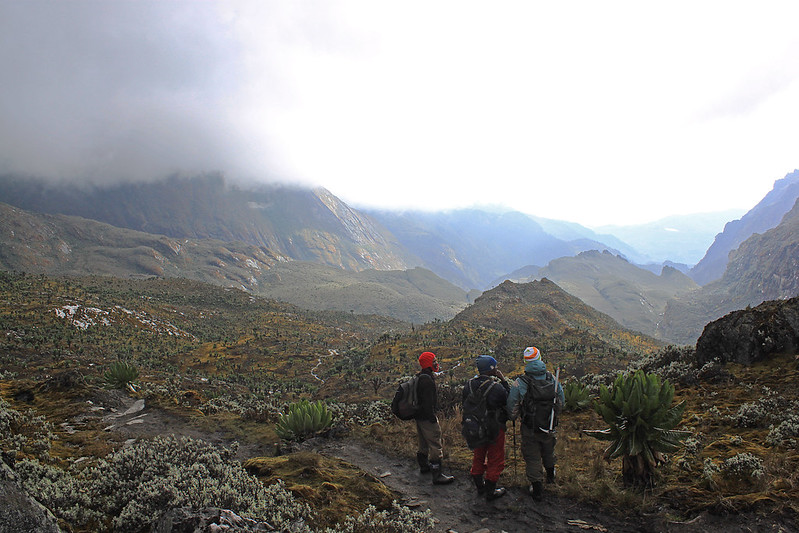
This would be hard day any way through some very difficult terrain where accidents are likely to happen. It took me several pain killers and a lot of will to get back down. Andreas was frustrated and complainted about me walking to slowy. My knee looked like a ballon, so there was not much I could to do. Yet there was no other option. There is no easy rescue up there. Recently a climber died at Kitandara from altitude sickness. He practically got trapped up there with no easy way down. We spent nearly 12 hours this day, and finally we got a taste of the rain these mountains are known for. When we reached the camp at night just as it got dark, I knew I had made it! The next day would be an easy return to the village.
Day 11 Hike back to Nyakalenjiga and driving to Kampala
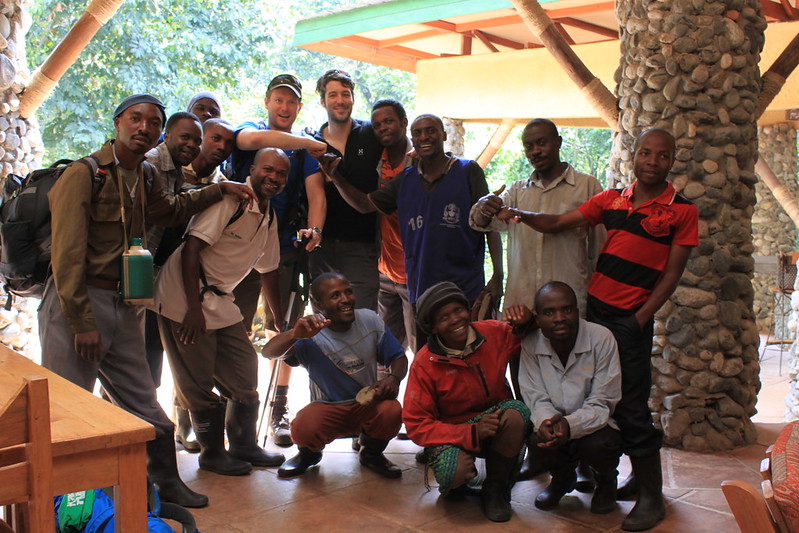
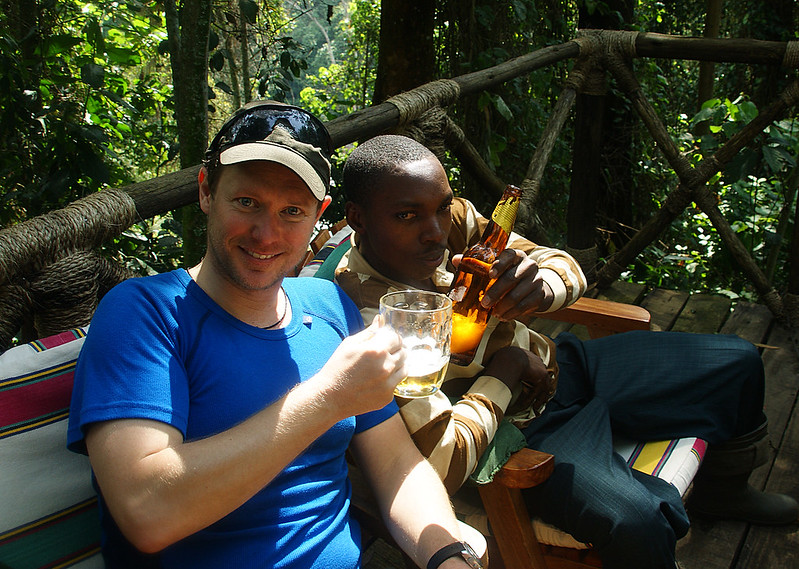
At Nyabitaba we had small cermony in the morning tipping the guides and porters. Andreas, the guides and I had an argument around the tipping, which is typical down here. It was not about how much to give, but the split between the crew. At the end everyone was happy, but it turned out that the porters was most happy with the beers we bought them at a lodge near the village. I have heard two years later that they still talk about this in the Rwenzori, as they had never experienced this from their clients before. It was ceirtanly a cheerful moment that I will remember for the rest of my life.
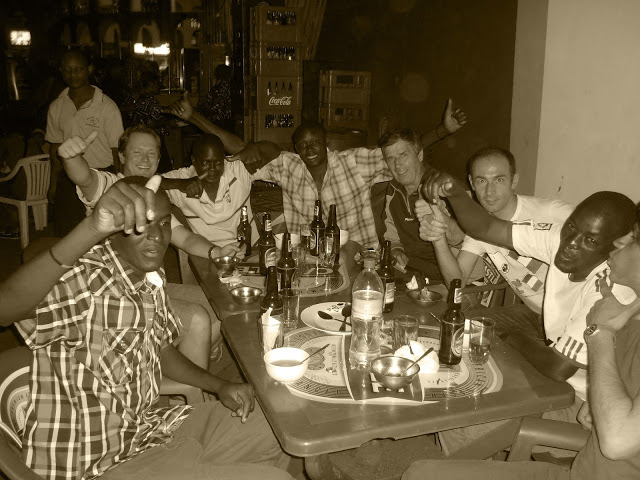
Back on the trekking station our driver had been waiting for several hours, and he was now anxious about driving us to Entebbe before it got dark. Once again we had a long drive (8 hours) full of wonderful impressions. However he realised that we would make it to Entebbe before dark, so instead we ended up in a hotel in central Kampala. The hotel was nice, but the bar a bit slow, so we wanted to head out on the town. We were advised to not leave the hotel after 8 PM, but that was an advise we were happy to ignore. We had a great evening, celebrating in one of Kampalas many bars, meeting great people. The fact that the door man carried a machine gun was a smaller detail we choosed to ignore at this point.
Day 12. Exploring Kampala, and flying out of Uganda.
The following day we had plenty of time to walk around Kampala. It’ was sunday but busy as any day could be. The traffic was a joke, and the streets full of people. I was glad to experience it, but happy to escape it too. In the afternoon we were on our way to the airport, and on our way to Doha. I couldn’t help my self feeling a bit sad leaving this rising country behind for this time.
Back in 2013 I made an amateur film from the expedition. It has supringsly more than 23K views. You can see it here:
You can see all photos from Rwenzori here (the gallery is not updated. I will do it as soon as possible.)
I have also planned to make a new and more proffesional film out of the footage from this trip during the autumn 2020.
 Eventyrland